Wednesday, June 29, 2016

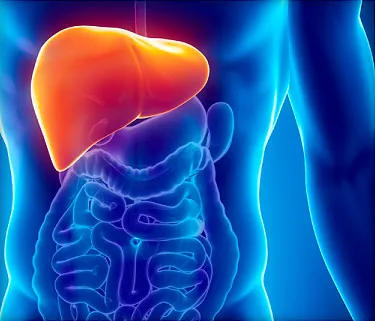
10 Ways to Wreck Your Liver


Certain diet and lifestyle choices can do major damage to this vital organ. Do your body a big favor: Break these habits before it's too late.
Trouble viewing this email? View as a Webpage Wednesday, June 29, 2016
webmd logo
E F T
  Special: Your Top Health Questions Answered
Missing Images!
Slideshow
Should I Take Vitamin D?
The "sunshine vitamin" boosts health and fights disease. Are you getting enough?
Missing Images!
Slideshow
What Are the Best Exercises?
For results you can see and feel, add these moves to your daily routine.
Missing Images!
Slideshow
What Causes Erectile Dysfunction?
ED becomes more common as guys age -- but a few simple lifestyle changes might help.
What Are the Warning Signs Of ...
A Heart Attack?
A Thyroid Issue?
Eye Problems?
Why Am I ...
In Pain?
Gaining Weight?
ADVERTISEMENT
ADVERTISEMENT
You are receiving this message because you registered with WebMD as mantiskhiralla@gmail.com.
If you did not register for WebMD please contact our Customer Care Team.
www.webmd.com  |   Unsubscribe  |  WebMD Privacy Policy
© 2016 WebMD, LLC. All rights reserved.
WebMD Office of Privacy | 1201 Peachtree Street, NE | Atlanta, GA 30361


6 Serious Symptoms Women Shouldn't Ignore


Weakness or pain in the legs could be signs of deeper problems. Here are more red flags that may signal trouble ahead.
webmd logo Daily
E F T
Wednesday, June 29, 2016
Missing Images
6 Serious Symptoms Women Shouldn't Ignore

Weakness or pain in the legs could be signs of deeper problems. Here are more red flags that may signal trouble ahead.
Read Article

  •  Are You at Risk for Lung Cancer?
  •  Unexpected Ways You May Be Damaging Your Liver
  •  Breast Cancer Warning Signs
In the News
IKEA Recalls Millions of Dressers
Pat Summitt's Death and Early-Onset Alzheimer's
Artificial Pancreas 'Hack' a Miracle for Diabetes?
Can You Get Alzheimer's From Donated Blood?
Elderly Often Get Unnecessary End-of-Life Treatments
From the WebMD Network
Parent's Guide to Helping Sick Kids
What Happens During an Autopsy?
Antibiotics 101
Featured
How Well Is Your MS Treatment Working?
Get the Facts About Type 1 Diabetes
Is Your Diabetes Under Control?
11 Things That May Wreck Your Bones
Super Foods for Healthy Bones
ADVERTISEMENT
 
ADVERTISEMENT
 
From Our Sponsors
Track Healthy Habits With Walgreens
Therapy at Home?
 
ADVERTISEMENT
Allergy App  
ADVERTISEMENT
 
 
Missing image   Missing image   Missing image   Missing image   Missing image
 
WebMD.com   |  Mobile Apps   |   Newsletters
 
You are receiving this message because you registered with WebMD as mantiskhiralla@gmail.com.
If you did not register for WebMD please contact our Customer Care Team
WebMD Privacy Policy   |  Unsubscribe
 
2016 WebMD, LLC. All rights reserved.
WebMD Office of Privacy | 1201 Peachtree Street, NE | Atlanta, GA 30361


Tackling intractable computing problems


06/29/2016 12:00 AM EDT

theoretical computer science

Computers have proven capable of helping scientists solve many research problems, from the dynamics of black hole mergers to distant connections in reams of genomic data.

But there are some problems that computers cannot solve -- at least not in a reasonable time frame.

The question concerning which problems can and can't be solved efficiently, also known as "intractability," are a great scientific challenge for computer scientists. One such question is one of the ...

More at http://www.nsf.gov/discoveries/disc_summ.jsp?cntn_id=138011&WT.mc_id=USNSF_51&WT.mc_ev=click


This is an NSF News and Discoveries item.

Save

This e-mail update was generated automatically based on your subscription to the category listed above. Some updates may belong to more than one category, resulting in duplicate messages.

NSF logo   Subscriber Services: Manage Preferences  |  Unsubscribe  |  Help  |  Contact NSF
  Follow NSF:  Follow us on YouTube Follow us on Twitter Follow us on Facebook Follow us on linkedin Follow us on RSS Follow us on email Science360 News Service Science Nation Online Magazine


Save


This email was sent to mantiskhiralla@gmail.com using GovDelivery, on behalf of: National Science Foundation Update · 4201 Wilson Boulevard · Arlington, VA 22230 · 703-292-5111 Powered by GovDelivery

American Heart Association - June 29, 2016 #2

Video may help heart failure patients choose level of end-of-life care
Genetically inherited high cholesterol increases long-term risks of coronary heart disease and stroke
Men may face high lifetime risk of sudden cardiac death