Saturday, April 15, 2017

Best Ways to Deal With Menopause

webmd logo Daily
Saturday, April 15, 2017
Missing Images
Best Ways to Deal With Menopause

Do you know what sets off your hot flashes? Keeping a diary can help you figure things out. We share more tips for easing symptoms.
View Slideshow

We Need Your Vote!
We Need Your Vote!

Help us win a Health & Fitness Social Media Webby Award.
Vote Here
Trending Videos
What Does Bacteria Really Do?
Ways to Avoid Overeating
The Truth About Gluten
Treatments for Toxic Shock
What Is Sciatica?
From the WebMD Network
The Diet and Nutrition Test
Nail Fungus Symptoms
What Can Cause Pain in Your Eyes?
Featured
Kidney Failure: Questions for Your Doctor
How to Use an AED
What to Do for Eczema
These Foods Can Stain Your Teeth
Myths About Lung Cancer Risks
ADVERTISEMENT
 
ADVERTISEMENT
 
 
ADVERTISEMENT
Allergy App  
ADVERTISEMENT


NASA Releases Spellbinding Images Of Earth At Night

New post on Universe Today

NASA Releases Spellbinding Images Of Earth At Night

by Evan Gough

NASA strives to explore space and to expand our understanding of our Solar System and beyond. But they also turn their keen eyes on Earth in an effort to understand how our planet is doing. Now, they're releasing a new composite image of Earth at night, the first one since 2012.

We've grown accustomed to seeing these types of images in our social media feeds, especially night-time views of Earth from the International Space Station. But this new image is much more than that. It's part of a whole project that will allow scientists—and the rest of us—to study Earth at night in unprecedented detail.

Night-time views of Earth have been around for 25 years or so, usually produced several years apart. Comparing those images shows clearly how humans are changing the face of the planet. Scientists have been refining the imaging over the years, producing better and more detailed images.

The team behind this is led by Miguel Román of NASA's Goddard Space Flight Center. They've been analyzing data and working on new software and algorithms to improve the quality, clarity, and availability of the images.

This new work stems from a collaboration between the National Oceanic and Atmospheric Administration (NOAA) and NASA. In 2011, NASA and NOAA launched a satellite called the Suomi National Polar-orbiting Partnership (NPP) satellite. The key instrument on that satellite is the Visible Infrared Imaging Radiometer Suite (VIIRS), a 275 kg piece of equipment that is a big step forward in Earth observation.

VIIRS detects photons of light in 22 different wavelengths. It's the first satellite instrument to make quantitative measurements of light emissions and reflections, which allows researchers to distinguish the intensity, types and the sources of night lights over several years.
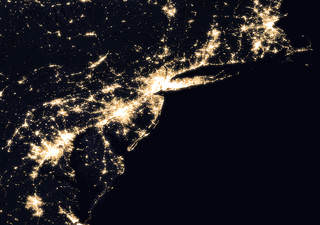
Composite image of Mid-Atlantic and Northeastern U.S. at night, 2016. Credits: NASA Earth Observatory images by Joshua Stevens, using Suomi NPP VIIRS data from Miguel Román, NASA's Goddard Space Flight Center

Composite image of Mid-Atlantic and Northeastern U.S. at night, 2016.
Credits: NASA Earth Observatory images by Joshua Stevens, using Suomi NPP VIIRS data from Miguel Román, NASA's Goddard Space Flight Center

Producing these types of maps is challenging. The raw data from SUOMI NPP and its VIIRS instrument has to be skillfully manipulated to get these images. The main challenge is the Moon itself.

As the Moon goes through its different phases, the amount of light hitting Earth is constantly changing. Those changes are predictable, but they still have to be accounted for. Other factors have to be managed as well, like seasonal vegetation, clouds, aerosols, and snow and ice cover. Other changes in the atmosphere, though faint, also affect the outcome. Phenomenon like auroras change the way that light is observed in different parts of the world.

The newly released maps were made from data throughout the year, and the team developed algorithms and code that picked the clearest night views each month, ultimately combining moonlight-free and moonlight-corrected data.
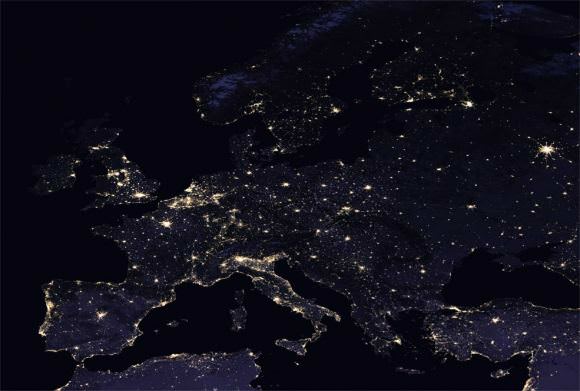
A glittering night-time map of Europe. Looks like there's a Kraftwerk concert happening in Dusseldorf! NASA Earth Observatory images by Joshua Stevens, using Suomi NPP VIIRS data from Miguel Román, NASA's Goddard Space Flight Center

A glittering night-time map of Europe. Looks like there's a Kraftwerk concert happening in Dusseldorf! NASA Earth Observatory images by Joshua Stevens, using Suomi NPP VIIRS data from Miguel Román, NASA's Goddard Space Flight Center

The SUOMI NPP satellite is in a polar orbit, and it observes the planet in vertical swaths that are about 3,000 km wide. With its VIIRS instrument, it images almost every location on the surface of the Earth, every day. VIIRS low-light sensor has six times better spatial resolution for distinguishing night lights, and 250 times better resolution overall than previous satellites.

What do all those numbers mean? The team hopes that their new techniques, combined with the power of VIIRS, will create images with extraordinary resolution: the ability to distinguish a single highway lamp, or fishing boat, anywhere on the surface of Earth.
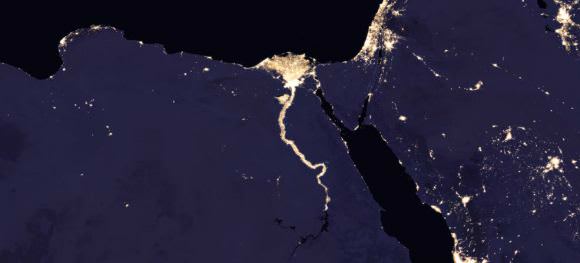
Composite image of Nile River and surrounding region at night, 2016. Credits: NASA Earth Observatory images by Joshua Stevens, using Suomi NPP VIIRS data from Miguel Román, NASA's Goddard Space Flight Center

Composite image of Nile River and surrounding region at night, 2016.
Credits: NASA Earth Observatory images by Joshua Stevens, using Suomi NPP VIIRS data from Miguel Román, NASA's Goddard Space Flight Center

Beyond thought-provoking eye-candy for the rest of us, these images of night-time Earth have practical benefits to researchers and planners.

"Thanks to VIIRS, we can now monitor short-term changes caused by disturbances in power delivery, such as conflict, storms, earthquakes and brownouts," said Román. "We can monitor cyclical changes driven by reoccurring human activities such as holiday lighting and seasonal migrations. We can also monitor gradual changes driven by urbanization, out-migration, economic changes, and electrification. The fact that we can track all these different aspects at the heart of what defines a city is simply mind-boggling."
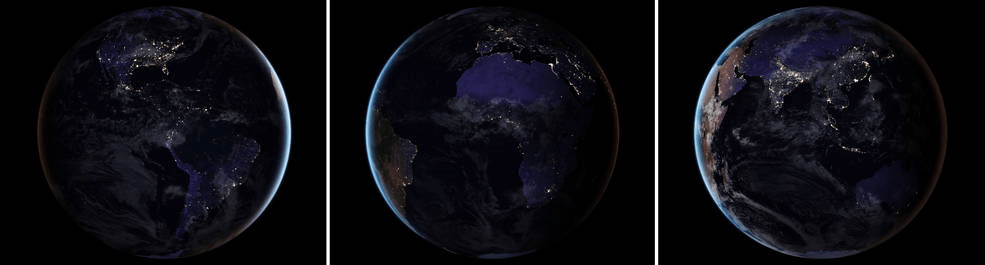
These three composite images provide full-hemisphere views of Earth at night. The clouds and sun glint — added here for aesthetic effect — are derived from MODIS instrument land surface and cloud cover products. Credits: NASA Earth Observatory images by Joshua Stevens, using Suomi NPP VIIRS data from Miguel Román, NASA's Goddard Space Flight Center

These three composite images provide full-hemisphere views of Earth at night. The clouds and sun glint — added here for aesthetic effect — are derived from MODIS instrument land surface and cloud cover products.
Credits: NASA Earth Observatory images by Joshua Stevens, using Suomi NPP VIIRS data from Miguel Román, NASA's Goddard Space Flight Center

These maps of night-time Earth are a powerful tool. But the newest development will be a game-changer: Román and his team aim to provide daily, high-definition views of Earth at night. Daily updates will allow real-time tracking of changes on Earth's surface in a way never before possible.

Maybe the best thing about these upcoming daily night-time light maps is that they will be publicly available. The SUOMI NPP satellite is not military and its data is not classified in any way. They hope to have these daily images available later this year. Once the new daily light-maps of Earth are available, it'll be another powerful tool in the hands of researchers and planners, and the rest of us.

These maps will join other endeavours like NASA-EOSDIS Worldview. Worldview is a fascinating, easy-to-use data tool that anyone can access. It allows users to look at satellite images of the Earth with user-selected layers for things like dust, smoke, draught, fires, and storms. It's a powerful tool that can change how you understand the world.

Comment    See all comments

Trouble clicking? Copy and paste this URL into your browser: 

https://www.universetoday.com/135026/nasa-releases-spellbinding-images-of-earth-at-night/


Black Hole Imaged For First Time By Event Horizon Telescope

New post on Universe Today

Black Hole Imaged For First Time By Event Horizon Telescope

by Matt Williams

For decades, scientists have held that Supermassive Black Holes (SMBHs) reside at the center of larger galaxies. These reality-bending points in space exert a extremely powerful influence on all things that surround them, consuming matter and spitting out a tremendous amount of energy. But given their nature, all attempts to study them has been confined to indirect methods.

All of that changed beginning on Wednesday, April 12th, 2017, when an international team of astronomers obtained the first-ever image of a Sagittarius A*. Using a series of telescopes from around the globe - collectively known as the Event Horizon Telescope (EHT) - they were able to visualize the  mysterious region around this giant black hole from which matter and energy cannot escape - i.e. the event horizon.

Not only is this the first time that this mysterious region around a black hole has been imaged, it is also the most extreme test of Einstein's Theory of General Relativity ever attempted. It also represents the culmination of the EHT project, which was established specifically for the purpose of studying black holes directly and improving our understanding of them.

Simulated view of a black hole. Credit: Bronzwaer/Davelaar/Moscibrodzka/Falcke/Radboud University

Since it began capturing data in 2006, the EHT has been dedicated to the study of Sagitarrius A* since it is the nearest SMBH in the known Universe - located about 25,000 light years from Earth. Specifically, scientists hoped to determine if black holes are surrounded by a circular region from which matter and energy cannot escape (which is predicted by General Relativity), and how they accrete matter onto themselves.

Rather than constituting a single facility, the EHT relies on a worldwide network of radio astronomy facilities based on four continents, all of which are dedicated to studying one of the most powerful and mysterious forces in the Universe. This process, whereby widely-space radio dishes from across the globe are connected into an Earth-sized virtual telescope, is known as Very Long Baseline Interferometry (VLBI).

As Michael Bremer - an astronomer at the International Research Institute for Radio Astronomy (IRAM) and a project manager for the Event Horizon Telescope - said in an interview with AFP:

"Instead of building a telescope so big that it would probably collapse under its own weight, we combined eight observatories like the pieces of a giant mirror. This gave us a virtual telescope as big as Earth—about 10,000 kilometers (6,200 miles) is diameter."

Sagittarius A is the super-massive black hole at the center of our Milky Way Galaxy. It is shown in x-ray (blue) and infrared (red) in this combined image from the Chandra Observatory and the Hubble Space Telescope. Image: X-ray: NASA/UMass/D.Wang et al., IR: NASA/STScI

Combined image of Sagittarius A shown in x-ray (blue) and infrared (red), provided by the Chandra Observatory and the Hubble Space Telescope. Credit: X-ray: NASA/UMass/D.Wang et al., IR: NASA/STScI

All told, the network includes instruments like the Atacama Large Millimeter/submillimeter Array (ALMA) in Chile, the Arizona Radio Observatory Submillimeter Telescope, the IRAM 30-meter Telescope in Spain, the Large Millimeter Telescope Alfonso Serrano in Mexico, the South Pole Telescope in Antarctica, and the James Clerk Maxwell Telescope and Submillimeter Array at Mauna Kea, Hawaii.

With these arrays, the EHT radio-dish network is the only one powerful enough to detect the light released when an object would disappear into Sagittarius A*. And for five nights in a row - from Sunday, April 9th to Friday, April 14th - all of its arrays were trained on the center of our Milky Way to do just that. On Wednesday, April 12th, the international team announced that they had snapped the first-ever picture of an event horizon.

In the end, some 500 terabytes of data were collected. This data is now being transferred to the MIT Haystack Observatory in Massachusetts, where it will be processed by supercomputers and turned into an image. "For the first time in our history, we have the technological capacity to observe black holes in detail," said Bremer. "The images will emerge as we combine all the data. But we're going to have to wait several months for the result."

Part of the reason for the wait is the fact that the recorded data obtained by the South Pole Telescope can only be collected when spring starts in Antarctica - which won't happen until October 2017 at the earliest. As such, it won't be until 2018 before the public gets to feast its eyes on the shadow region that surrounds Sagittarius A*, and it is not expected that the first image will be entirely clear.

As Heino Falcke - an astronomers from Radbound University who now chairs the Scientific Council of EHT (and was the one who proposed this experiment twenty years ago) - explained in a EHT press release prior to the observation being made:

"It is the challenge of doing something, that has never been attempted before. It is the start of an adventurous journey towards a black hole... However, I think we need more observation campaigns and eventually more telescopes in the network to make a really good image."

Despite the wait, and the fact that repeated attempts will be needed before we can get our first clear look at a black hole, there is still plenty of reason to celebrate in the meantime. Not only was this a first that was a long time in he making, but it also represents a major leap towards understanding one of the most powerful and mysterious forces of nature.

Given time, the study of black holes may allow for us to finally resolve how gravity and the other fundamental forces of the Universe interact. At long last, we will be able to comprehend all of existence as a single, unified equation!

Further Reading: Event Horizon Telescope, NRAO

Matt Williams | April 15, 2017 at 3:01 pm | Tags: Event Horizon Telescope, Featured | Categories: News | URL: http://wp.me/p1CHIY-z7m
Comment    See all comments

Trouble clicking? Copy and paste this URL into your browser: 

https://www.universetoday.com/134996/black-hole-imaged-first-time-event-horizon-telescope/


Daily Bulletin | 15.04.2017, 18:30 UTC

If you cannot view this message correctly, please click here.
 
DEUTSCHE WELLE facebook   twitter   fwd  
Daily Bulletin 15.04.2017 | 18:30 UTC
News
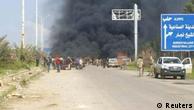
Dozens killed in attack on evacuation bus convoy
An explosion has killed at least 39 people awaiting evacuation from the government-held towns of Foua and Kfraya. The blast came as evacuation efforts stalled throughout the night.
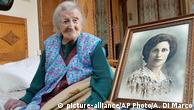
Emma Morano, last known survivor of 19th century, dies
Born in November 1899, Emma Morano has died at her home in northern Italy. She lived for 117 years and 137 days, making her the oldest Italian person ever. But what was the secret of her longevity?
Dortmund attack explosive 'from German military' - media
A German newspaper has said explosives used to attack the Borussia Dortmund team bus may have come from the armed forces. The players were on their way to a Champions League match on Tuesday when three blasts went off.
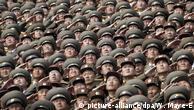
North Korea vows to respond to US aggression with 'nuclear attack'
North Korea has paraded its intercontinental ballistic missiles in a military display celebrating the state's founding. The isolated communist nation said it would respond to any US aggression with an "all out war."
Le Pen may face EU Parliament grilling ahead of election
Far-right French presidential candidate Marine Le Pen could be called upopn by EU lawmakers to discuss lifting her parliamentary immunity. The National Front leader is being investigated over alleged misuse of EU funds.
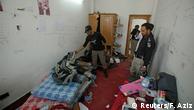
Pakistan journalism student latest victim of blasphemy vigilantes
A 23-year-old journalism student in Pakistan has been killed by a vigilante mob over allegations of blasphemy. The brutal murder shocked many liberals who believe that state policies are emboldening religious fanatics.
World
Turkey
Observers to guard against voter fraud in Turkey's referendum
Following allegations of foul play in past elections, ballot box observers hope to deter voter fraud in Turkey's divisive referendum. Diego Cupolo reports from Ankara.
Sports
RB Leipzig and Freiburg on different roads to over achievement, but only one has a speed limit
Leipzig's dismantling of the team that beat them to the second division title last year is further proof of a divide both philosophical and economic, but both approaches are working, writes DW's Matt Pearson.
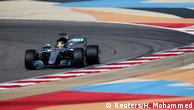
Bottas takes first ever pole for Bahrain GP
Qualifying for the Bahrain Grand Prix is over and there's a new man leading the pack - to the delight of a former Mercedes driver. The Grand Prix is the third race of the 2017 season.
Bayern Munich miss chance to win in Leverkusen
In Saturday's seventh Bundesliga game, Bayern Munich had the chances to win in Leverkusen, but it was the hosts who showed the defending champions how to defend with 10 men.

Bundesliga: Reus scores on BVB return, Mainz and Augsburg win
On an emotional matchday in the Bundesliga, Borussia Dortmund got three points, while almost all the teams in the relegation battle picked up points. Bayern Munich travel to Leverkusen later.

  © Deutsche Welle 2017