Tuesday, September 20, 2016

JPL News - Day in Review


DAY IN REVIEW
NASA JPL latest news release
NASA Scientists Find 'Impossible' Cloud on Titan -- Again

The puzzling appearance of an ice cloud seemingly out of thin air has prompted NASA scientists to suggest that a different process than previously thought -- possibly similar to one seen over Earth's poles -- could be forming clouds on Saturn's moon Titan.

Located in Titan's stratosphere, the cloud is made of a compound of carbon and nitrogen known as dicyanoacetylene (C4N2), an ingredient in the chemical cocktail that colors the giant moon's hazy, brownish-orange atmosphere.

Decades ago, the infrared instrument on NASA's Voyager 1 spacecraft spotted an ice cloud just like this one on Titan. What has puzzled scientists ever since is this: they detected less than 1 percent of the dicyanoacetylene gas needed for the cloud to condense.

Recent observations from NASA's Cassini mission yielded a similar result. Using Cassini's composite infrared spectrometer, or CIRS -- which can identify the spectral fingerprints of individual chemicals in the atmospheric brew -- researchers found a large, high-altitude cloud made of the same frozen chemical. Yet, just as Voyager found, when it comes to the vapor form of this chemical, CIRS reported that Titan's stratosphere is as dry as a desert.

"The appearance of this ice cloud goes against everything we know about the way clouds form on Titan," said Carrie Anderson, a CIRS co-investigator at NASA's Goddard Space Flight Center in Greenbelt, Maryland, and lead author of the study.

The typical process for forming clouds involves condensation. On Earth, we're familiar with the cycle of evaporation and condensation of water. The same kind of cycle takes place in Titan's troposphere -- the weather-forming layer of Titan's atmosphere -- but with methane instead of water.

A different condensation process takes place in the stratosphere -- the region above the troposphere -- at Titan's north and south winter poles. In this case, layers of clouds condense as the global circulation pattern forces warm gases downward at the pole. The gases then condense as they sink through cooler and cooler layers of the polar stratosphere.

Either way, a cloud forms when the air temperature and pressure are favorable for the vapor to condense into ice. The vapor and the ice reach a balance point -- an equilibrium -- that is determined by the air temperature and pressure. Because of this equilibrium, scientists can calculate the amount of vapor where ice is present.

"For clouds that condense, this equilibrium is mandatory, like the law of gravity," said Robert Samuelson, an emeritus scientist at Goddard and a co-author of the paper.

But the numbers don't compute for the cloud made from dicyanoacetylene. The scientists determined that they would need at least 100 times more vapor to form an ice cloud where the cloud top was observed by Cassini's CIRS.

One explanation suggested early on was that the vapor might be present, but Voyager's instrument wasn't sensitive enough in the critical wavelength range needed to detect it. But when CIRS also didn't find the vapor, Anderson and her Goddard and Caltech colleagues proposed an altogether different explanation. Instead of the cloud forming by condensation, they think the C4N2 ice forms because of reactions taking place on other kinds of ice particles. The researchers call this "solid-state chemistry," because the reactions involve the ice, or solid, form of the chemical.

The first step in the proposed process is the formation of ice particles made from the related chemical cyanoacetylene (HC3N). As these tiny bits of ice move downward through Titan's stratosphere, they get coated by hydrogen cyanide (HCN). At this stage, the ice particle has a core and a shell comprised of two different chemicals. Occasionally, a photon of ultraviolet light tunnels into the frozen shell and triggers a series of chemical reactions in the ice. These reactions could begin either in the core or within the shell. Both pathways can yield dicyanoacteylene ice and hydrogen as products.

The researchers got the idea of solid-state chemistry from the formation of clouds involved in ozone depletion high above Earth's poles. Although Earth's stratosphere has scant moisture, wispy nacreous clouds (also called polar stratospheric clouds) can form under the right conditions. In these clouds, chlorine-bearing chemicals that have entered the atmosphere as pollution stick to crystals of water ice, resulting in chemical reactions that release ozone-destroying chlorine molecules.

"It's very exciting to think that we may have found examples of similar solid-state chemical processes on both Titan and Earth," said Anderson.

The researchers suggest that, on Titan, the reactions occur inside the ice particles, sequestered from the atmosphere. In that case, dicyanoacetylene ice wouldn't make direct contact with the atmosphere, which would explain why the ice and the vapor forms are not in the expected equilibrium.

"The compositions of the polar stratospheres of Titan and Earth could not differ more," said Michael Flasar, CIRS principal investigator at Goddard. "It is amazing to see how well the underlying physics of both atmospheres has led to analogous cloud chemistry."

The findings are published in the journal Geophysical Research Letters.

The Cassini-Huygens mission is a cooperative project of NASA, ESA (European Space Agency) and the Italian Space Agency. NASA's Jet Propulsion Laboratory, a division of Caltech in Pasadena, manages the mission for NASA's Science Mission Directorate, Washington. JPL designed, developed and assembled the Cassini orbiter. The CIRS instrument was built by Goddard.

For more information about Cassini, visit:

http://www.nasa.gov/cassini

http://saturn.jpl.nasa.gov


This message was sent to mantiskhiralla@gmail.com from:

NASA Jet Propulsion Laboratory | jplnewsroom@jpl.nasa.gov | NASA's Jet Propulsion Laboratory | 4800 Oak Grove Dr | Pasadena, CA 91109


7 Reasons Why Alcohol May Be Good for You


In moderation, a drink might be good for your heart, mind, sex, social life, and more. Here's what you need to know.
Trouble viewing this email? View as a Webpage Tuesday, September 20, 2016
webmd logo
E F T
Special
Missing Images! Slideshow
Surprising Ways Alcohol May Be Good for You
In moderation, a drink might be good for your heart, mind, sex, social life, and more. Here's what you need to know.
Slideshow
What Is Gout, What Are Its Symptoms, and What Can You Do for It?
Quiz
Hair Loss: Are Products You Use Making Things Worse?
Slideshow
Disorganized? Make Your Day Easier With These Tips
Slideshow
See What Toenail Fungus Looks Like and How to Treat It
Slideshow
11 Home Remedies That May Help Your Migraine
Missing Images!
WebMD News Special
Get the Latest News on Zika
ADVERTISEMENT
ADVERTISEMENT
 
Missing image   Missing image   Missing image   Missing image   Missing image
 
WebMD.com   |  Mobile Apps   |   Newsletters
 
You are receiving this message because you registered with WebMD as mantiskhiralla@gmail.com.
If you did not register for WebMD please contact our Customer Care Team
WebMD Privacy Policy   |  Unsubscribe  
 
© 2016 WebMD, LLC. All rights reserved.
WebMD Office of Privacy | 1201 Peachtree Street, NE | Atlanta, GA 30361


[eo-announce] Earth Observatory: What's New Week of 20 September 2016

The latest from NASA's Earth Observatory (20 September 2016)
------------------------------------------------------------------------

New Features:
http://earthobservatory.nasa.gov/Features/

* Sea Ice
  http://earthobservatory.nasa.gov/Features/SeaIce/?src=eoa-features
    Polar sea ice grows and shrinks dramatically each year, driven by seasonal cycles. Habitat for wildlife and harbinger of changing climate, sea ice offers scientists important clues about the state of our planet.

--------------------

Latest Images:
http://earthobservatory.nasa.gov/IOTD/

* Soberanes Still Burns
  http://earthobservatory.nasa.gov/IOTD/view.php?id=88781&src=eoa-iotd

* How Cities and Suburbs Affect Chesapeake Bay
  http://earthobservatory.nasa.gov/IOTD/view.php?id=88742&src=eoa-iotd

* Water Swirls, Gulf of St. Lawrence
  http://earthobservatory.nasa.gov/IOTD/view.php?id=88770&src=eoa-iotd

* Lava Flow on Volcan de Fuego
  http://earthobservatory.nasa.gov/IOTD/view.php?id=88722&src=eoa-iotd

* Greenland's Lesser-Known Glaciers
  http://earthobservatory.nasa.gov/IOTD/view.php?id=88765&src=eoa-iotd

* Arctic Sea Ice Minimum Ties Second Lowest on Record
  http://earthobservatory.nasa.gov/IOTD/view.php?id=88757&src=eoa-iotd

* Siberian River Has Turned Red Before, Satellites Show
  http://earthobservatory.nasa.gov/IOTD/view.php?id=88725&src=eoa-iotd

* Super Typhoon Meranti
  http://earthobservatory.nasa.gov/IOTD/view.php?id=88749&src=eoa-iotd

--------------------

Recent Blog Posts:
http://earthobservatory.nasa.gov/blogs/

Earth Matters
* September Puzzler
  http://earthobservatory.nasa.gov/blogs/earthmatters/?p=6437&src=eoa-blogs

* Study: Typhoons in the Northwestern Pacific are Getting Stronger
  http://earthobservatory.nasa.gov/blogs/earthmatters/?p=6409&src=eoa-blogs

Notes from the Field
* A Flight, a Sunset and a Traditional Namibian Braai
  http://earthobservatory.nasa.gov/blogs/fromthefield/?p=8341&src=eoa-blogs

* The 2016 Beaufort Gyre Exploration Project: Searching for Sea Ice
  http://earthobservatory.nasa.gov/blogs/fromthefield/?p=8335&src=eoa-blogs

* Channel Fever as an Expeditionary Malady
  http://earthobservatory.nasa.gov/blogs/fromthefield/?p=8327&src=eoa-blogs

* Student Shadow Program Sees ORACLES in Action
  http://earthobservatory.nasa.gov/blogs/fromthefield/?p=8321&src=eoa-blogs

* Microstructure
  http://earthobservatory.nasa.gov/blogs/fromthefield/?p=8313&src=eoa-blogs

* Balloon Bonanza
  http://earthobservatory.nasa.gov/blogs/fromthefield/?p=8305&src=eoa-blogs

* One Word
  http://earthobservatory.nasa.gov/blogs/fromthefield/?p=8299&src=eoa-blogs

--------------------


---------------------------------------------------------------------
NASA's Earth Observatory
Where every day is Earth day.
http://earthobservatory.nasa.gov/

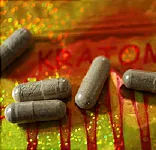
What Is Kratom and Why Is It Being Banned?


Advocates say the herb relieves pain, depression, and anxiety. So why is the DEA moving to ban it?
Trouble viewing this email? View as a Webpage Tuesday, September 20, 2016
webmd logo
E F T
Top Stories
Missing Images! Top Story
What Is Kratom, and Why Is It Being Banned?
Advocates say the herb relieves pain, depression, and anxiety. So why is the DEA moving to ban it?
Food and Diet News
What's Behind the Gluten-Free Trend, and Is It a Good Idea?
Food Poisoning News
Recall: 10,000 Cases of Eggo Waffles Due to Listeria
Cancer News
Cancer Moonshot: Can Government Push Turn the Tide on Cancer?
Men's Health News
Light Therapy May Boost Men's Interest in Sex
Food and Diet News
Beer Makes You Happier, Friendlier
Missing Images!
WebMD News Special
Get the Latest News on Zika
ADVERTISEMENT
ADVERTISEMENT
 
Missing image   Missing image   Missing image   Missing image   Missing image
 
WebMD.com   |  Mobile Apps   |   Newsletters
 
You are receiving this message because you registered with WebMD as mantiskhiralla@gmail.com.
If you did not register for WebMD please contact our Customer Care Team
WebMD Privacy Policy   |  Unsubscribe  
 
© 2016 WebMD, LLC. All rights reserved.
WebMD Office of Privacy | 1201 Peachtree Street, NE | Atlanta, GA 30361


What Can You Do for a Toothache?


See what can help as you wait to see a dentist. We also explain other problems, like cavities and impacted teeth.
webmd logo Daily
E F T
Tuesday, September 20, 2016
Missing Images
What Can You Do for a Toothache?

See what can help as you wait to see a dentist. We also explain other problems, like cavities and impacted teeth.
View Slideshow

  •  6 Signs of a Silent Migraine
  •  Famous People With Schizophrenia
  •  How Does a Narcissist Act?
In the News
Recall: 10,000 Cases of Eggo Waffles
Light Therapy May Boost Men's Interest in Sex
CDC: Too Many Antibiotics Being Prescribed
Discounts Prompt More to Eat Fruits, Veggies
Vasectomy May Not Raise Prostate Cancer Risk
From the WebMD Network
Prescription Drug Abuse Numbers
What Is Insulin Resistance?
Electromyogram (EMG) Test
Featured
How to Get the Most Out of Your Hair Color
10 Dehydration Warning Signs
Treating Depression Without Meds
What to Look for in a Clinical Trial
ADVERTISEMENT
 
ADVERTISEMENT
 
From Our Sponsors
Track Healthy Habits With Walgreens
Help with Painful Knees
 
ADVERTISEMENT
Allergy App  
ADVERTISEMENT
 
 
Missing image   Missing image   Missing image   Missing image   Missing image
 
WebMD.com   |  Mobile Apps   |   Newsletters
 
You are receiving this message because you registered with WebMD as mantiskhiralla@gmail.com.
If you did not register for WebMD please contact our Customer Care Team
WebMD Privacy Policy   |  Unsubscribe
 
© 2016 WebMD, LLC. All rights reserved.
WebMD Office of Privacy | 1201 Peachtree Street, NE | Atlanta, GA 30361