Saturday, December 17, 2016

Alternative Treatments for AFib


This heart condition can be potentially serious. Does it require medication? Not always. Here's what you need to know.
webmd logo Daily
Saturday, December 17, 2016
Missing Images
Alternative Treatments for AFib

This heart condition can be potentially serious. Does it require medication? Not always. Here's what you need to know.
View Slideshow

Trending Videos
What Happens When You Have a Herniated Disk
See Inside Knee Replacement Surgery
Stretches for Your Lower Back
Yoga Poses
Pet Safety During the Holidays
From the WebMD Network
Parkinson's Disease
Pelvic Inflammatory Disease
Understanding Heart Palpitations
Featured
How to Care for Childhood Eczema
Could Stress Be Making Your MS Worse?
How Birth Order Affects Who You Are
Gut Bacteria and Your Health
Creating a Crohn's-Friendly Diet
ADVERTISEMENT
 
ADVERTISEMENT
 
From Our Sponsors
Track Healthy Habits With Walgreens
Food Intolerance Diet
 
ADVERTISEMENT
Allergy App  
ADVERTISEMENT


Highest Capacity North American Internet Satellite to Launch on Atlas V Dec. 18 – Watch Live


Ken Kremer posted: " CAPE CANAVERAL AIR FORCE STATION, FL - The highest capacity satellite delivering high speed internet to homes and businesses in North America is scheduled for an early afternoon blastoff on a mighty ULA Atlas V on Sunday, Dec. 18, from the F"

New post on Universe Today

Highest Capacity North American Internet Satellite to Launch on Atlas V Dec. 18 – Watch Live

by Ken Kremer

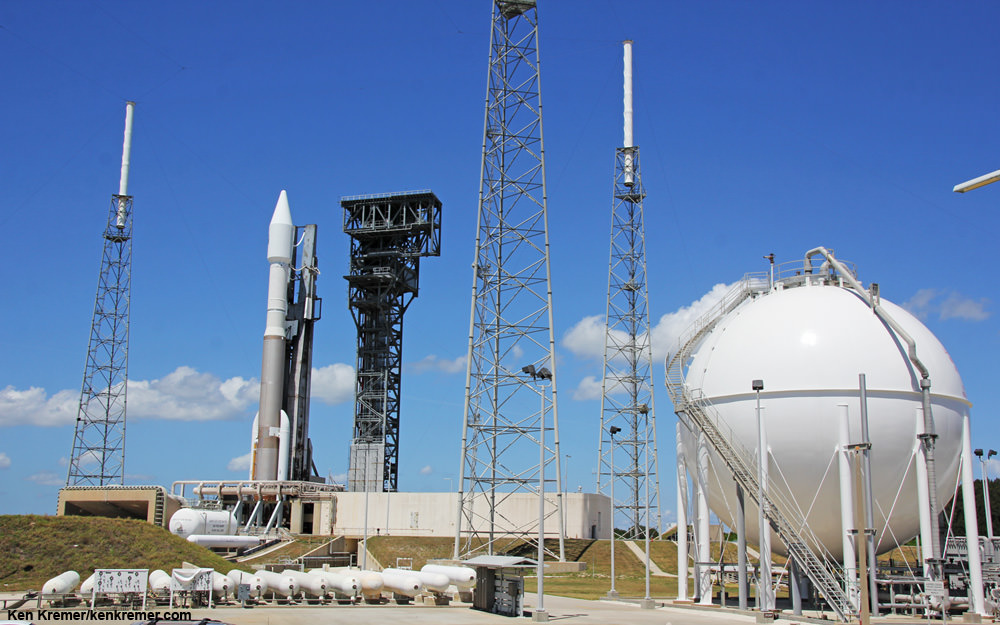
A ULA Atlas V rocket carrying the NROL-61 satellite is poised for blastoff from the pad at Space Launch Complex-41 at Cape Canaveral Air Force Station in Florida on July 28, 2016.   Credit: Ken Kremer/kenkremer.com

A ULA Atlas V rocket carrying the NROL-61 satellite is poised for blastoff from the pad at Space Launch Complex-41 at Cape Canaveral Air Force Station in Florida on July 28, 2016. Credit: Ken Kremer/kenkremer.com

CAPE CANAVERAL AIR FORCE STATION, FL - The highest capacity satellite delivering high speed internet to homes and businesses in North America is scheduled for an early afternoon blastoff on a mighty ULA Atlas V on Sunday, Dec. 18, from the Florida Space Coast.

The lunchtime liftoff should thrill spectators since the venerable United Launch Alliance Atlas V booster carrying EchoStar 19 to orbit is equipped with a trio of solid rocket boosters making for a highly visible plume trailing behind all the way to geosynchronous orbit - weather permitting of course.

"EchoStar XIX will be the world's highest capacity broadband satellite in orbit, dramatically increasing capacity for HughesNet® high-speed satellite Internet service to homes and businesses in North America," according to ULA.

It will deliver more speed, more data and more advanced features to consumers and small businesses from coast to coast, says EchoStar.
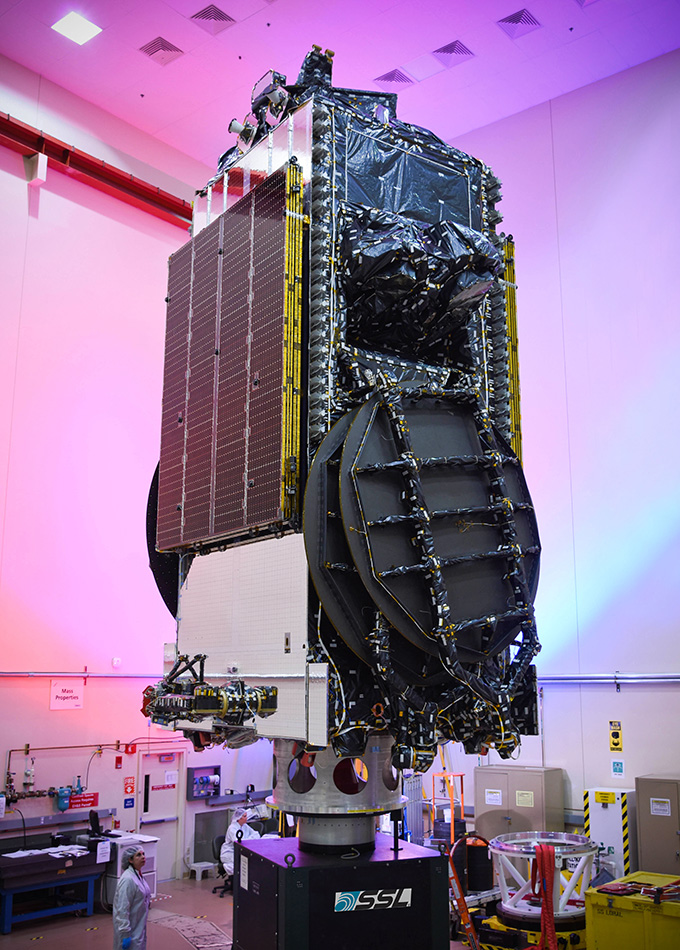
EchoStar 19  satellite being processed

EchoStar 19 satellite being processed

The ULA Atlas V will launch the EchoStar XIX mission for Hughes from Space Launch Complex (SLC)-41 at Cape Canaveral Air Force Station, Florida, on Sunday, Dec. 18, 2016,

The launch window opens at 1:27 p.m. EST.

The launch window extends for two hours from 1:27 to 3:37 p.m. EST.

You can watch the Atlas launch live via a ULA webcast. The live launch broadcast will begin about 20 minutes before the planned liftoff at 1:07 p.m. EST here:

http://www.ulalaunch.com/webcast.aspx
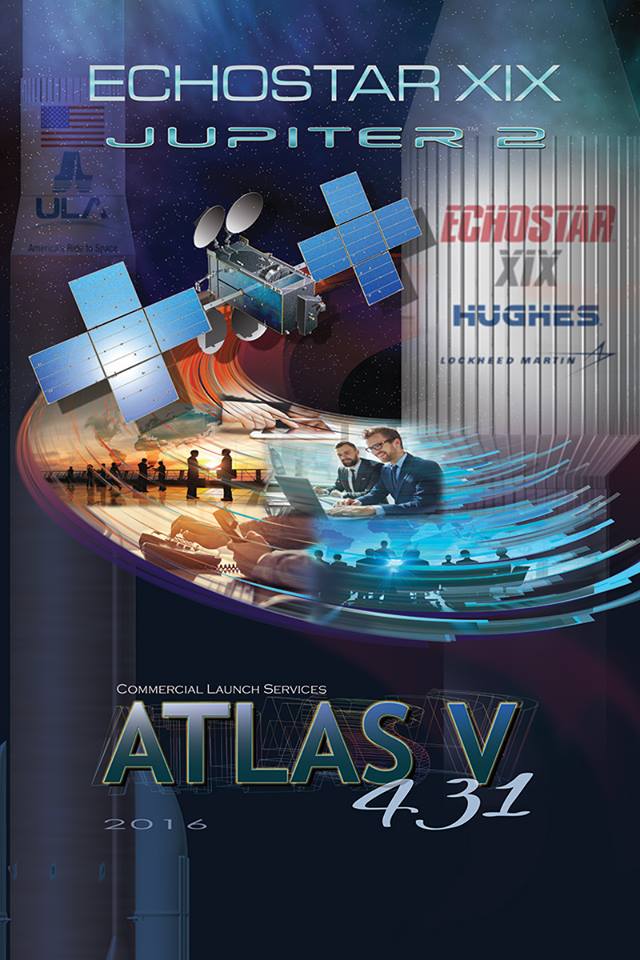
Artwork for ULA Atlas V launch of EchoStar 19 high speed Internet satellite on Dec. 18, 2016 from  Canaveral Air Force Station, Florida.  Credit: ULA

Artwork for ULA Atlas V launch of EchoStar 19 high speed Internet satellite on Dec. 18, 2016 from Canaveral Air Force Station, Florida. Credit: ULA

Because of the added solids, the soar to space should be spectacular for locals and tourists gathering from around the world to view the launch now slated for just a day away.

And since the liftoff is taking place on a weekend at lunchtime, that makes it perfectly convenient for a family outing in the sunshine state amidst this Christmas holiday season - which is currently sunny!!

The weather forecast for Sunday, Dec. 18, calls for a 70 percent chance of acceptable weather conditions at launch time.

The primary concerns are for think clouds and cumlulus clouds.

EchoStar 19 will be delivered to a geosynchronous transfer orbit (GTO) atop the United Launch Alliance Atlas V booster.

It will be stationed at 97.1 degrees West longitude.

EchoStar 19 was built by Space Systems Loral (SSL) and is based on the powerful SSL 1300 platform as a multi-spot beam Ka-band satellite.

It is upgraded from the prior series version.

"Building from their experience on the highly successful EchoStar XVII broadband satellite, SSL and Hughes collaboratively engineered the specific design details of this payload for optimum performance."

The 194-foot-tall commercial Atlas V booster will launch in the 431 rocket configuration with three solids booster attached to augment the first stage.

Stay tuned here for Ken's continuing Earth and Planetary science and human spaceflight news.

Ken Kremer

Ken Kremer | December 17, 2016 at 12:37 pm | Tags: Cape Canaveral Air Force Station | URL: http://wp.me/p1CHIY-ysy
Comment    See all comments

Unsubscribe to no longer receive posts from Universe Today.
Change your email settings at Manage Subscriptions.

Trouble clicking? Copy and paste this URL into your browser:
http://www.universetoday.com/132466/highest-capacity-internet-satellite-to-launch-on-atlas-v-on-dec-18-watch-live/


EarthSky News - Dec 17 - Ceres Bright Spots Get Names


December 17
Ceres Bright Spots Get Names
Like us on Facebook
Follow us on Twitter
Instagram
Website
Ceres bright spots get names
The International Astronomical Union approved the new names on November 26, and scientists used them while discussing other findings about Ceres at this week's American Geophysical Union meeting.
Today in science: Wright brothers succeed
Check out one of the world's most famous early photos. It shows the Wright brothers and the 1st true airplane on December 17, 1903.
Tonight … Moon and Regulus
Moon and star Regulus rise in the east at late evening and appear near each other for the rest of the night. Regulus is considered the Lion's Heart.
Star of the week: Mirfak in Perseus
Mirfak isn't as famous as its brother star in Perseus, called Algol. But Mirfak is easier to find and can help guide you to Algol.
Shop at The EarthSky Store

Your support means the world to us and allows us to continue the work we do. Thanks!

Tonight: Moon and Regulus
Moon and star Regulus rise in the east at late evening and appear near each other for the rest of the night. Regulus is considered the Lion's Heart.
Today's image: Ice monster lighthouse
"The lighthouse is starting to look like an ice monster," said Joshua Nowicki. He took this shot on December 15 on the north pier in Saint Joseph, Michigan.
Like us on Facebook
Follow us on Twitter
Instagram
Website
Want to change how you receive these emails?
You can update your profile or unsubscribe