Thursday, December 29, 2016

JPL News - Day in Review


DAY IN REVIEW
NASA JPL latest news release
NASA's NEOWISE Mission Spies One Comet, Maybe Two

NASA's NEOWISE mission has recently discovered some celestial objects traveling through our neighborhood, including one on the blurry line between asteroid and comet. Another--definitely a comet--might be seen with binoculars through next week.

An object called 2016 WF9 was detected by the NEOWISE project on Nov. 27, 2016. It's in an orbit that takes it on a scenic tour of our solar system. At its farthest distance from the sun, it approaches Jupiter's orbit. Over the course of 4.9 Earth-years, it travels inward, passing under the main asteroid belt and the orbit of Mars until it swings just inside Earth's own orbit. After that, it heads back toward the outer solar system. Objects in these types of orbits have multiple possible origins; it might once have been a comet, or it could have strayed from a population of dark objects in the main asteroid belt.

2016 WF9 will approach Earth's orbit on Feb. 25, 2017. At a distance of nearly 32 million miles (51 million kilometers) from Earth, this pass will not bring it particularly close. The trajectory of 2016 WF9 is well understood, and the object is not a threat to Earth for the foreseeable future.

A different object, discovered by NEOWISE a month earlier, is more clearly a comet, releasing dust as it nears the sun. This comet, C/2016 U1 NEOWISE, "has a good chance of becoming visible through a good pair of binoculars, although we can't be sure because a comet's brightness is notoriously unpredictable," said Paul Chodas, manager of NASA's Center for Near-Earth Object (NEO) Studies at the Jet Propulsion Laboratory in Pasadena, California.

As seen from the northern hemisphere during the first week of 2017, comet C/2016 U1 NEOWISE will be in the southeastern sky shortly before dawn. It is moving farther south each day and it will reach its closest point to the sun, inside the orbit of Mercury, on Jan. 14, before heading back out to the outer reaches of the solar system for an orbit lasting thousands of years. While it will be visible to skywatchers at Earth, it is not considered a threat to our planet either.

NEOWISE is the asteroid-and-comet-hunting portion of the Wide-Field Infrared Survey Explorer (WISE) mission. After discovering more than 34,000 asteroids during its original mission, NEOWISE was brought out of hibernation in December of 2013 to find and learn more about asteroids and comets that could pose an impact hazard to Earth. If 2016 WF9 turns out to be a comet, it would be the 10th discovered since reactivation. If it turns out to be an asteroid, it would be the 100th discovered since reactivation.

What NEOWISE scientists do know is that 2016 WF9 is relatively large: roughly 0.3 to 0.6 mile (0.5 to 1 kilometer) across.

It is also rather dark, reflecting only a few percent of the light that falls on its surface. This body resembles a comet in its reflectivity and orbit, but appears to lack the characteristic dust and gas cloud that defines a comet.

"2016 WF9 could have cometary origins," said Deputy Principal Investigator James "Gerbs" Bauer at JPL. "This object illustrates that the boundary between asteroids and comets is a blurry one; perhaps over time this object has lost the majority of the volatiles that linger on or just under its surface."

Near-Earth objects (NEOs) absorb most of the light that falls on them and re-emit that energy at infrared wavelengths. This enables NEOWISE's infrared detectors to study both dark and light-colored NEOs with nearly equal clarity and sensitivity.

"These are quite dark objects," said NEOWISE team member Joseph Masiero, "Think of new asphalt on streets; these objects would look like charcoal, or in some cases are even darker than that."

NEOWISE data have been used to measure the size of each near-Earth object it observes. Thirty-one asteroids that NEOWISE has discovered pass within about 20 lunar distances from Earth's orbit, and 19 are more than 460 feet (140 meters) in size but reflect less than 10 percent of the sunlight that falls on them.

The Wide-field Infrared Survey Explorer (WISE) has completed its seventh year in space after being launched on Dec. 14, 2009.

Data from the NEOWISE mission are available on a website for the public and scientific community to use. A guide to the NEOWISE data release, data access instructions and supporting documentation are available at:

http://wise2.ipac.caltech.edu/docs/release/neowise/

Access to the NEOWISE data products is available via the on-line and API services of the NASA/IPAC Infrared Science Archive.

A list of peer-reviewed papers using the NEOWISE data is available at:

http://neowise.ipac.caltech.edu/publications.html


NASA Jet Propulsion Laboratory | jplnewsroom@jpl.nasa.gov | NASA's Jet Propulsion Laboratory | 4800 Oak Grove Dr | Pasadena, CA 91109


Human Resources Specialist, OIRM/HRM, GS-0201-13 MP (Closes: 01/05/2017)


Human Resources Specialist, OIRM/HRM, GS-0201-13 MP (Closes: 01/05/2017)


Available Formats:
HTML: https://www.usajobs.gov/GetJob/ViewDetails/461084100

Document Number: hrm20170021


This is a NSF Vacancies item.


This email was sent using GovDelivery, on behalf of: National Science Foundation Update · 4201 Wilson Boulevard · Arlington, VA 22230 · 703-292-5111 Powered by GovDelivery

Signs of a Heart Problem


Heart disease is the No. 1 killer in the U.S., but it doesn't have to be. Learn to spot the common symptoms and what puts you at risk.
Trouble viewing this email? View as a Webpage Thursday, December 29, 2016
Special
Missing Images! Slideshow
Signs of a Heart Problem
Heart disease is the No. 1 killer in the U.S., but it doesn't have to be. Learn to spot the common symptoms and what puts you at risk.
Quiz
Can Styling Products Cause Permanent Hair Loss?
Slideshow
How to Make Healthier Choices When Grocery Shopping
Slideshow
Diet 'Rules' You Should Probably Stop Following
Quiz
Which Hand Does More Work When Typing?
Slideshow
See What Shingles Looks Like
All About Diabetes
Type 1 Diabetes
Type 2 Diabetes
ADVERTISEMENT
ADVERTISEMENT
 
Missing image   Missing image   Missing image   Missing image   Missing image
 
WebMD.com   |  Mobile Apps   |   Newsletters


© 2016 WebMD, LLC. All rights reserved.
WebMD Office of Privacy | 1201 Peachtree Street, NE | Atlanta, GA 30361


NASA Might Build an Ice House on Mars


Nancy Atkinson posted: "At first glance, a new concept for a NASA habitat on Mars looks like a cross between Mark Watney's inflatable potato farm from "The Martian" and the home of Luke's Uncle Owen on Tatooine from "Star Wars." The key to the new design relies on something "

New post on Universe Today

NASA Might Build an Ice House on Mars

by Nancy Atkinson

At first glance, a new concept for a NASA habitat on Mars looks like a cross between Mark Watney's inflatable potato farm from "The Martian" and the home of Luke's Uncle Owen on Tatooine from "Star Wars."

The key to the new design relies on something that may or may not be abundant on Mars: underground water or ice.

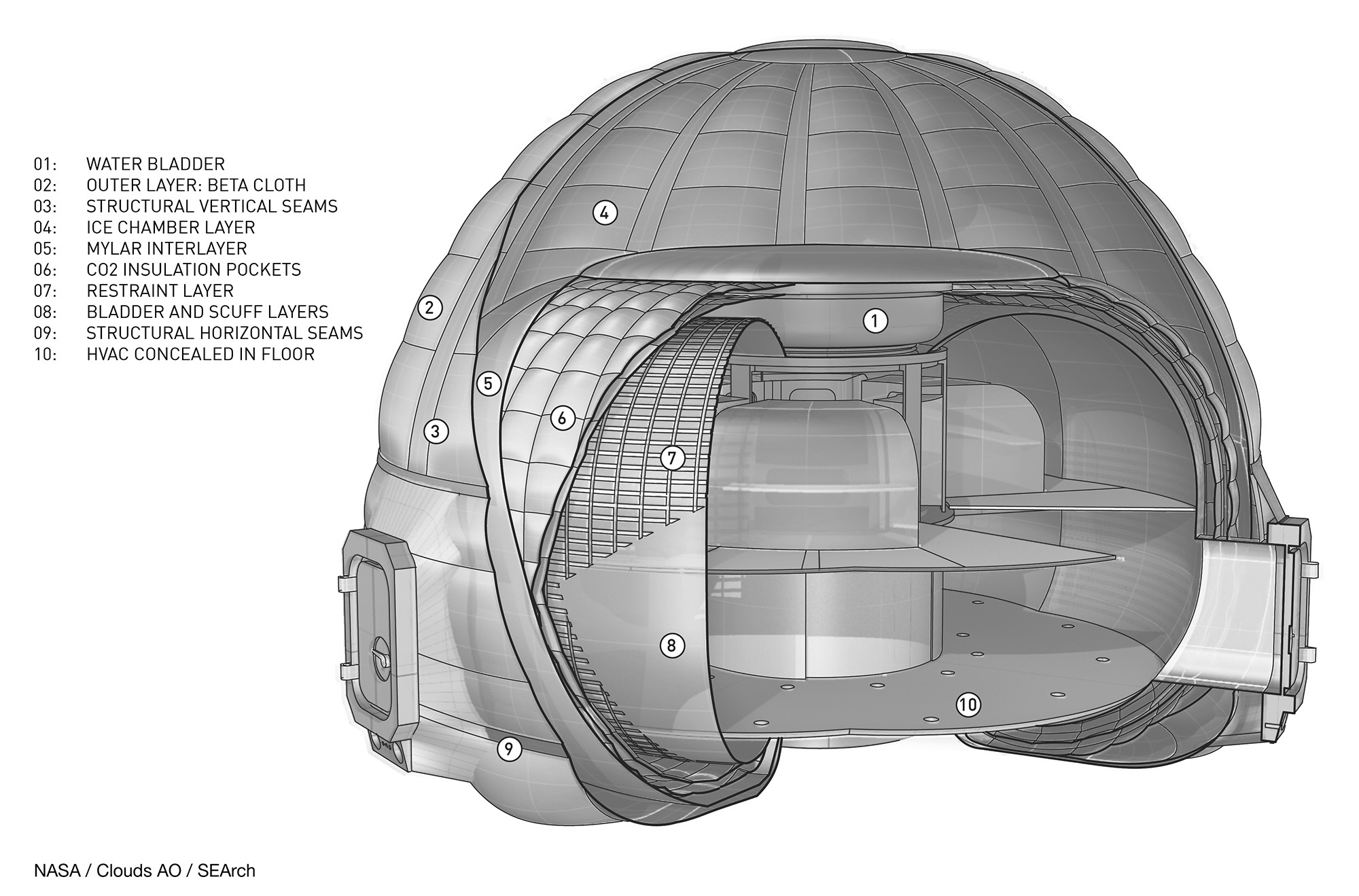
The "Mars Ice Home" is a large inflatable dome that is surrounded by a shell of water ice. NASA said the design is just one of many potential concepts for creating a sustainable home for future Martian explorers. The idea came from a team at NASA's Langley Research Center that started with the concept of using resources on Mars to help build a habitat that could effectively protect humans from the elements on the Red Planet's surface, including high-energy radiation.

The Mars Ice Home concept. Credit: Clouds Architecture Office, NASA Langley Research Center,
Space Exploration Architecture.

Langley senior systems engineer Kevin Vipavetz who facilitated the design session said the team assessed "many crazy, out of the box ideas and finally converged on the current Ice Home design, which provides a sound engineering solution," he said.

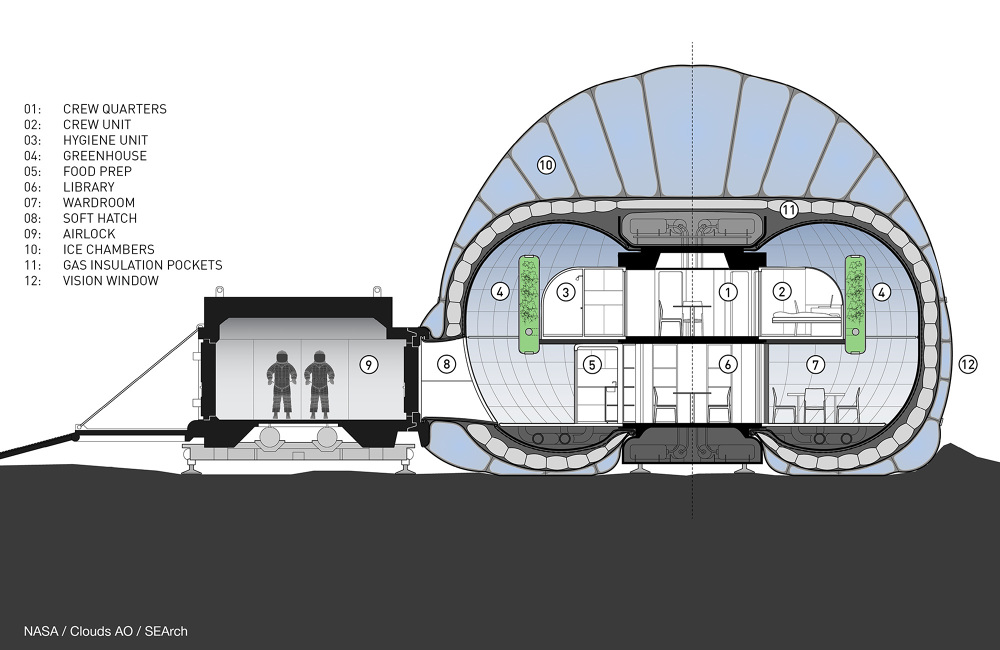
The advantages of the Mars Ice Home is that the shell is lightweight and can be transported and deployed with simple robotics, then filled with water before the crew arrives. The ice will protect astronauts from radiation and will provide a safe place to call home, NASA says. But the structure also serves as a storage tank for water, to be used either by the explorers or it could potentially be converted to rocket fuel for the proposed Mars Ascent Vehicle. Then the structure could be refilled for the next crew.

A cutaway of the interior of the Mars Ice Home concept. Credit: NASA Langley/Clouds AO/SEArch.

Other concepts had astronauts living in caves, or underground, or in dark, heavily shielded habitats. The team said the Ice Home concept balances the need to provide protection from radiation, without the drawbacks of an underground habitat. The design maximizes the thickness of ice above the crew quarters to reduce radiation exposure while also still allowing light to pass through ice and surrounding materials.

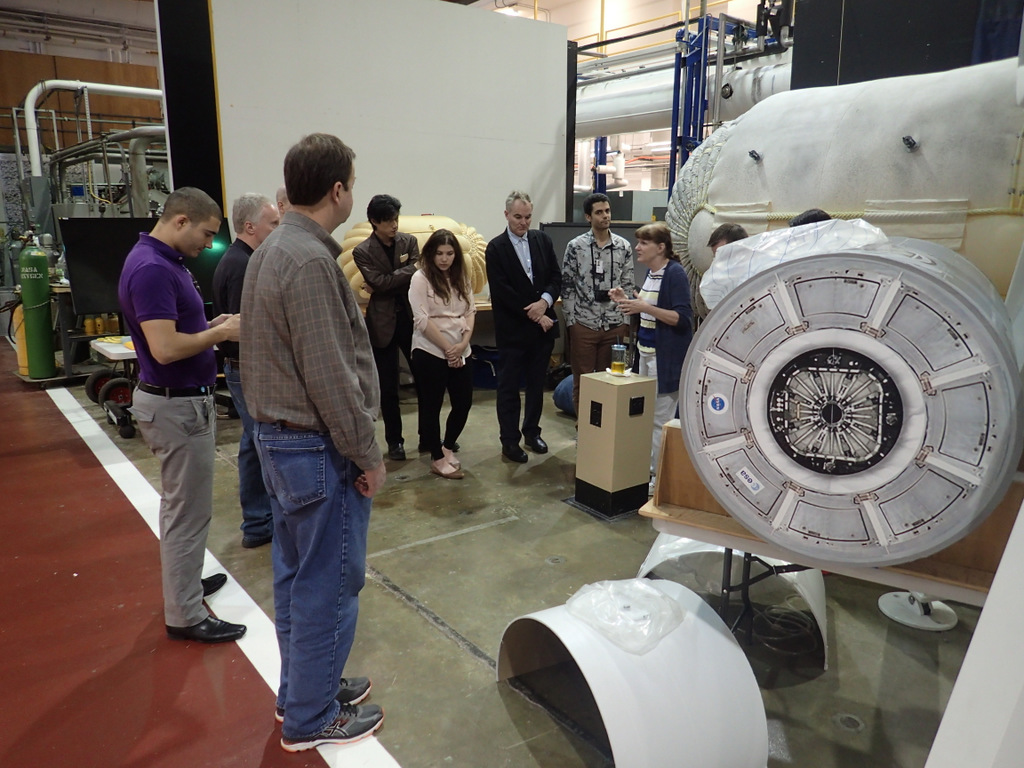
Team members of the Ice Home Feasibility Study discuss past and present technology development efforts in inflatable structures at NASA's Langley Research Center.
Credits: Courtesy of Kevin Kempton/NASA.

"All of the materials we've selected are translucent, so some outside daylight can pass through and make it feel like you're in a home and not a cave," said Kevin Kempton, also part of the Langley team.

One key constraint is the amount of water that can be reasonably extracted from Mars. Experts who develop systems for extracting resources on Mars indicated that it would be possible to fill the habitat at a rate of one cubic meter, or 35.3 cubic feet, per day. This rate would allow the Ice Home design to be completely filled in 400 days, so the habitat would need to be constructed robotically well before the crew arrives. The design could be scaled up if water could be extracted at higher rates.

The team wanted to also include large areas for workspace so the crew didn't have to wear a pressure suit to do maintenance tasks such as working on robotic equipment. To manage temperatures inside the Ice Home, a layer of carbon dioxide gas -- also available on Mars -- would be used as in insulation between the living space and the thick shielding layer of ice.

"The materials that make up the Ice Home will have to withstand many years of use in the harsh Martian environment, including ultraviolet radiation, charged-particle radiation, possibly some atomic oxygen, perchlorates, as well as dust storms – although not as fierce as in the movie 'The Martian'," said Langley researcher Sheila Ann Thibeault.

Find out more about the concept here.

Another cutaway of the interior design of the Mars Ice Home concept. Credit: NASA Langley/ Clouds AO/SEArch.

Nancy Atkinson | December 29, 2016 at 6:09 pm | Tags: Featured | URL: http://wp.me/p1CHIY-yuU
Comment    See all comments

Trouble clicking? Copy and paste this URL into your browser: 

http://www.universetoday.com/132612/nasa-might-build-ice-house-mars/


What Is the Low-Residue Diet All About?


This diet limits fiber from nuts, seeds, and some grains that may be hard to digest. We explain how to get the nutrients you need.
webmd logo Daily
Thursday, December 29, 2016
Missing Images
What Is the Low-Residue Diet All About?

This diet limits fiber from nuts, seeds, and some grains that may be hard to digest. We explain how to get the nutrients you need.
View Slideshow

In the News
Factors That May Have Contributed to Carrie Fisher's Death
Why Do Adult Women Get Acne?
More People Expected to Get Melanoma
Disabled Children Face Bullying Throughout School
Diabetes Care Tops U.S. Health Care Spending
From the WebMD Network
Take Our Heart Disease Test
Sugar and Sweeteners
What Is Altitude Sickness?
Featured
Signs of a Heart Attack
Healthy Habits for a Longer Life
Foods That May Help Prevent Dementia
Food Trends to Watch in 2017
What Does Your Thyroid Do?
ADVERTISEMENT
 
ADVERTISEMENT
 
 
From Our Sponsors
Track Healthy Habits With Walgreens
Need More Time to Recover? Let Kindred Healthcare Help
 
ADVERTISEMENT
Allergy App  
ADVERTISEMENT