Friday, January 13, 2017

NLM Announcements


National Institutes of Health, U.S. National Library of Medicine

You are subscribed to NLM Announces from the U.S. National Library of Medicine. 

01/13/2017 01:00 PM EST

How well will a new malaria screener work? We want to know. NLM and our collaborators developed an automated system for detecting the malaria parasite that runs on smart phones. Working with the universities of Oxford, Mahidol, and Missouri, we developed a way to use the phone's camera and an adapter to connect the phone…
01/13/2017 10:34 AM EST

Two new videos on the NCBI YouTube channel demonstrate how to use Clone DB and clone placements to assess and improve genome assemblies.

This email was sent using GovDelivery, on behalf of: U.S. National Library of Medicine · 8600 Rockville Pike · Bethesda, MD 20894 Powered by GovDelivery

Space sortie

13-01-2017 11:22 PM CET


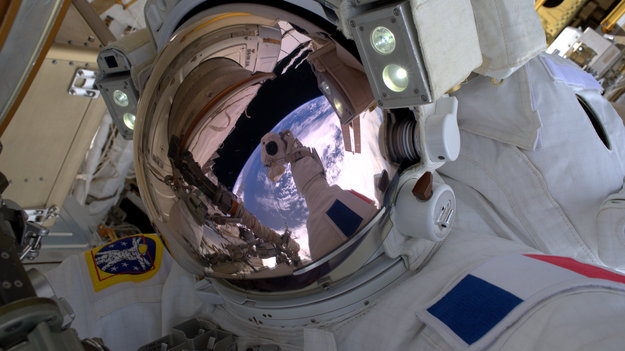
Thomas Pesquet and Shane Kimbrough's spacewalk in pictures


Having trouble viewing this email? View it as a Web page.


This message has been sent by ESA Web Portal, ESRIN, 00044 Frascati (RM), Italy

BREAKING: With House passage of budget resolution, Congress completes first step toward Obamacare repeal


Having trouble viewing this email? | View it in your browser

FB TW g+ Ins

  House members have passed a budget resolution that paves the way for a swift repeal of Obamacare. Friday's House vote follows Senate passage of the resolution early Thursday morning. The resolution would allow the eventual Affordable Care Act repeal legislation to pass with a simple majority in the Senate, avoiding a filibuster by Senate Democrats.

FOR MORE ON THIS STORY, GO TO:
  USATODAY.COM  


Help | Advertise | Home Delivery | Privacy Policy - Your California Privacy Rights  
  © 2017 USA TODAY, a division of Gannett Satellite Information Network, LLC.
7950 Jones Branch Drive, McLean, VA 22108


NASA Digest, Vol 44, Issue 7


  January 13, 2017 
MEDIA ADVISORY M17-003
NASA, NOAA to Announce 2016 Global Temperatures, Climate Conditions

Climate experts from NASA and the National Oceanic and Atmospheric Administration (NOAA) will provide the annually-scheduled release of data on global temperatures and discuss the most important climate trends of 2016 during a media teleconference at 11 a.m. EST Wednesday, Jan. 18.

The teleconference panelists are:

  • Gavin Schmidt, director of NASA's Goddard Institute for Space Studies in New York
  • Deke Arndt, chief of the global monitoring branch of NOAA's National Centers for Environmental Information in Asheville, North Carolina

Media can participate in the teleconference by calling 888-323-5258 (toll-free in the United States and Canada) or 415-228-4837 (international) and use the passcode "climate."

Audio of the briefing, as well as supporting graphics, will stream live at:

http://www.nasa.gov/newsaudio

NASA and NOAA are two keepers of the world's temperature data and independently produce a record of Earth's surface temperatures, as well as changes based on historical observations over oceans and land.

For more information about NASA's Earth science programs, visit:

http://www.nasa.gov/earth


Press Contacts

Sean Potter
Headquarters, Washington
202-358-1536
sean.potter@nasa.gov

Michael Cabbage / Leslie McCarthy
Goddard Institute for Space Studies, New York
212-678-5516 / 212-678-5507
mcabbage@nasa.gov / leslie.m.mccarthy@nasa.gov

John Leslie
NOAA National Environmental Satellite, Data and Information Service, Silver Spring, Md.
301-713-0214
john.leslie@noaa.gov

Brady Phillips
NOAA Headquarters, Washington
202-407-1298
brady.phillips@noaa.gov


  January 13, 2017 
MEDIA ADVISORY M17-005
NASA Invites Media to Pre-Super Bowl Event at Johnson Space Center
Football floats aboard the space station
The regulation football floated aboard the International Space Station.
Credits: NASA

Media are invited to visit NASA's Johnson Space Center in Houston ahead of Super Bowl LI to get an insider's look at the central hub of human space exploration and interview experts from across the agency and industry. The event will be held from 7:30 a.m. to 1 p.m. CST on Wednesday, Feb. 1.

During this behind-the-scenes visit, media will see real-world examples of astronaut training, NASA's Orion spacecraft, deep space technologies, and current work aboard the International Space Station. The event will include a live, interactive conversation with NASA astronauts Shane Kimbrough and Peggy Whitson, who are currently living and working 250 miles off the Earth on the space station.

To apply, media must email jsccommu@mail.nasa.gov no later than 5 p.m. Friday, Jan. 27.

NASA experts, including an astronaut, will be available for interviews about a variety of human spaceflight activities.

Reporters also will have the opportunity to:

  • Meet an astronaut and the people who train and support them in space
  • Tour special locations around Johnson, including the current International Space Station and historic Apollo Mission Control rooms, mockups of the space station, the Orion spacecraft and the Neutral Buoyancy Laboratory, a huge pool where astronauts train for spacewalks
  • Hear from NASA experts as they explain the many analogies between America's space program and football
  • Learn about current scientific experiments underway aboard the space station and new experiments planned to launch in the future
  • See how the space station is being used as a scientific laboratory to test groundbreaking new technologies that will help astronauts safely reach deep space destinations

NASA is on an ambitious Journey to Mars that includes sending humans to the Red Planet in the 2030s, and the agency's robotic spacecraft are already leading the way. Orion and the agency's Space Launch System rocket will launch together for the first time in 2018 and be capable of sending humans farther from Earth than humans have ever traveled. Aboard the International Space Station, astronauts are researching many science disciplines, conducting cutting-edge technology development and growing a commercial marketplace in space.

NASA will tweet about the event using the hashtag #SpaceBowl. For more on NASA's connections to football, visit:

http://www.nasa.gov/football

For more information about Johnson Space Center, visit:

http://www.nasa.gov/johnson


Press Contacts

Jim Wilson
Headquarters, Washington
202-358-1752
jim.wilson@nasa.gov

Megan Sumner
Johnson Space Center, Houston
281-483-5111
megan.c.sumner@nasa.gov


SpaceNews This Week | Moon Express fully funded for Google Lunar X Prize bid


January 13, 2017
View this email in your browser

Moon Express fully funded for Google Lunar X Prize bid

Jeff Foust —Moon Express announced Jan. 13 that it has closed a $20 million financing round, giving the company sufficient funds for an attempt to win the Google Lunar X Prize later this year.

A Planet-Terra Bella merger would make sense, industry watchers say

Debra Werner— The reported deal comes as a surprise to some Earth imaging experts because Google's parent Alphabet acquired Skybox for about $500 million only two and a half years ago, saying the imagery would improve Google Maps and bolster its campaign to provide global Internet access. 

Spain's GMV takes a stake in PLD Space's reusable rocket quest

Caleb Henry  Spanish rocket startup PLD Space said Jan. 9 that it has raised the money it needs to continue development of its Arion 1 reusable suborbital launch vehicle thanks to a $7.1 million investment round lead by satellite ground systems provider GMV of Madrid, Spain.

Missile-warning SBIRS GEO-3 looking good for Jan. 19 launch

Phillip Swarts — The U.S. Air Force's next missile-warning satellite is set to launch from Florida Jan. 19, mission leaders said during a Tuesday teleconference with reporters.

Federal government tweaks space export control rules

Jeff Foust —  The federal government is taking more space-related items off of the most restrictive export control list, although some in industry believe the changes don't go far enough.

Asteroid missions face delays and restructuring

Jeff Foust — NASA is delaying contracts and other awards planned for its Asteroid Redirect Mission (ARM) early this year by a few months, citing uncertainty about the agency's budget.
Twitter
LinkedIn
Facebook
Copyright © 2017 SpaceNews Inc., All rights reserved.

Our mailing address is:
SpaceNews Inc.
1414 Prince St, Suite 204
Alexandria, VA 22314

Add us to your address book

HPR 11(2): NAISM summary report for England 2015; ECDC investigation of HAV outbreaks; prevention measures on bird flu in the UK; UK chemicals regulation after Brexit; enteric infections reports

The Moon is Older than We Thought, says New Study


Matt Williams posted: "For decades, scientists have been of the belief that the Moon, Earth's only natural satellite, was four and a half billion years old. According to this theory, the Moon was created from a fiery cataclysm produced by a collision between the Earth with a Ma"

New post on Universe Today

The Moon is Older than We Thought, says New Study

by Matt Williams

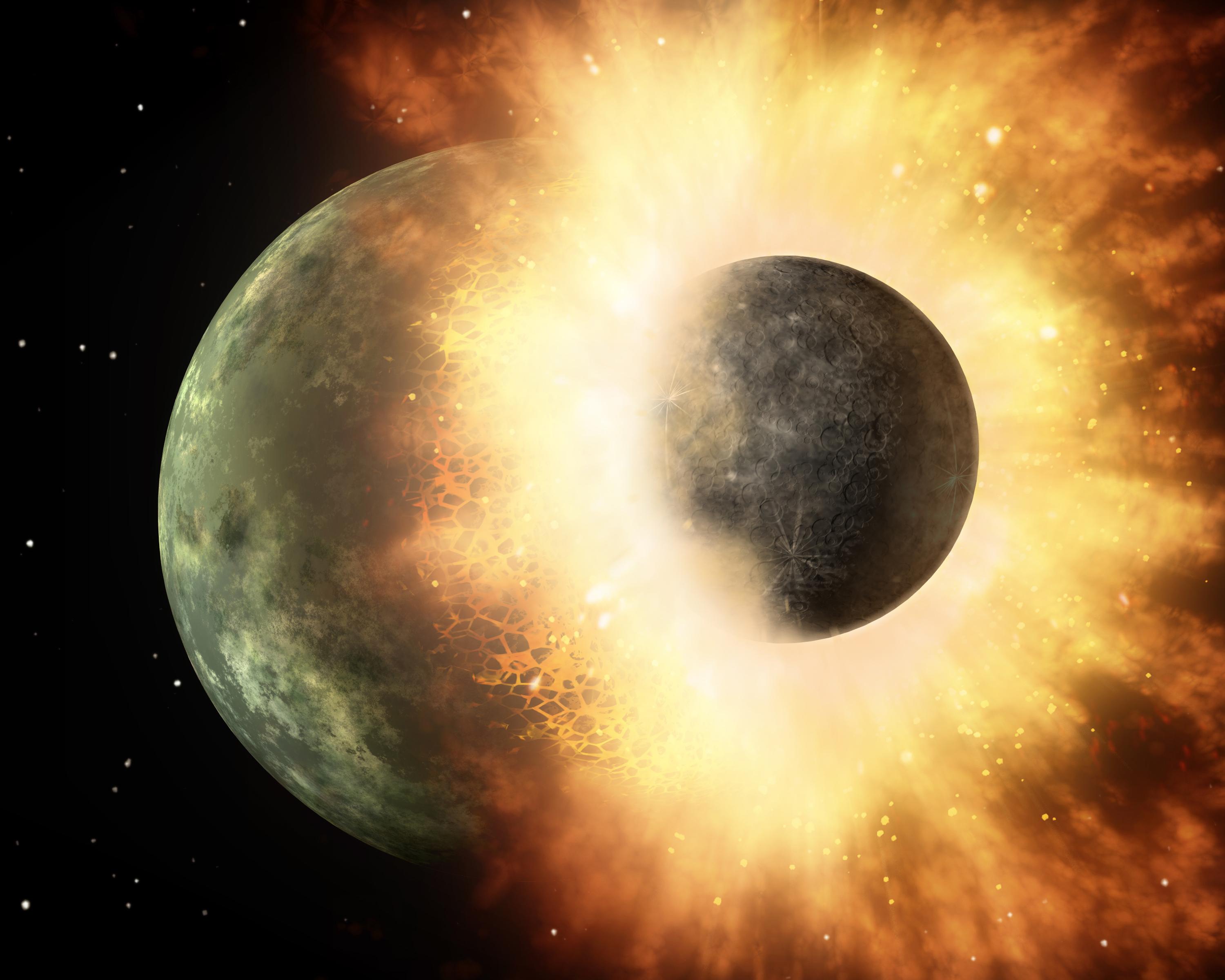
For decades, scientists have been of the belief that the Moon, Earth's only natural satellite, was four and a half billion years old. According to this theory, the Moon was created from a fiery cataclysm produced by a collision between the Earth with a Mars-sized object (named Theia) roughly 100 million years after the formation of primordial Earth.

But according to a new study by researchers from UCLA (who re-examined some of the Apollo Moon Rocks), these estimates may have been off by about 40 to 140 million years. Far from simply adjusting our notions of the Moon's proper age, these findings are also critical to our understanding of the Solar System and the formation and evolution of its rocky planets.

This study, titled "Early formation of the Moon 4.51 billion years ago", was published recently in the journal Science Advances. Led by Melanie Barboni - a professor from the Department of Earth, Planetary, and Space Sciences at UCLA - the research team conducted uranium-lead dating on fragments of the Moon rocks that were brought back by the Apollo 14 astronauts.

Artist's concept of a collision that is believed to have taken place in the HD 172555 star system between a moon-sized object and a Mercury-sized planet. Credit: NASA/JPL-Caltech

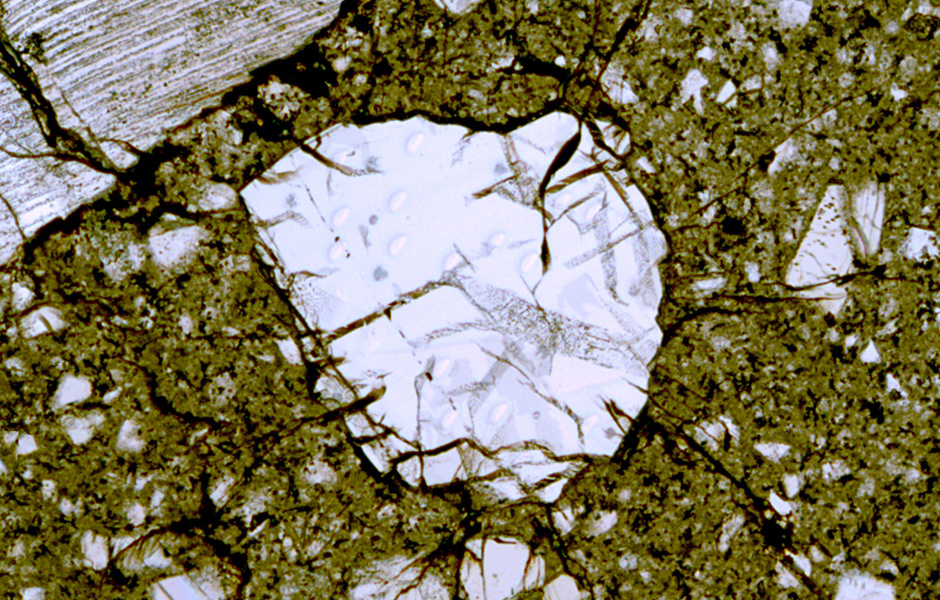
These fragments were of a compound known as zircon, a type of silicate mineral that contains trace amounts of radioactive elements (like uranium, thorium, and lutetium). As Kevin McKeegan, a UCLA professor of geochemistry and cosmochemistry and a co-author of the study, explained, "Zircons are nature's best clocks. They are the best mineral in preserving geological history and revealing where they originated."

By examining the radioactive decay of these elements, and correcting for cosmic ray exposure, the research team was able to get highly precise estimates of the zircon fragments ages. Using one of UCLA's mass spectrometers, they were able to measure the rate at which the deposits of uranium in the zircon turned into lead, and the deposits of lutetium turned into hafnium.

In the end, their data indicated that the Moon formed about 4.51 billion years ago, which places its birth within the first 60 million years of the Solar System or so. Previously, dating Moon rocks proved difficult, mainly because most of them contained fragments of many different kinds of rocks, and these samples were determined to be tainted by the effects of multiple impacts.

However, Barboni and her team were able to examine eight zircons that were in good condition. More importantly, these silicate deposits are believed to have formed shortly after the collision between Earth and Theia, when the Moon was still an unsolidified mass covered in oceans of magma.  As these oceans gradually cooled, the Moon's body became differentiated between its crust, mantle and core.

Zircon deposits found in the Moon rocks returned by the Apollo 17 mission. Credit: NASA//Nicholas E. Timms.

Because zircon minerals were formed during the initial magma ocean, uranium-lead dating reaches all the way back to a time before the Moon became a solidified mass. As Edward Young, a UCLA professor of geochemistry and cosmochemistry and a co-author of the study, put it, "Mélanie was very clever in figuring out the Moon's real age dates back to its pre-history before it solidified, not to its solidification."

These findings have not only determined the age of the Moon with a high degree of accuracy (and for the first time), it also has implications for our understanding of when and how rocky planes formed within the Solar System. By placing accurate dates on when certain bodies formed, we are able to understand the context in which they formed, which also helps to determine what mechanisms were involved.

And this was just the first revelation produced by the research team, which hopes to continue studying the zircon fragments to see what they can learn about the Moon's early history.

Further Reading: UCLA

Matt Williams | January 13, 2017 at 2:37 pm | Tags: Featured | URL: http://wp.me/p1CHIY-yyb
Comment    See all comments

Trouble clicking? Copy and paste this URL into your browser: 

http://www.universetoday.com/132815/moon-older-thought-says-new-study/