Showing posts with label International Space Station. Show all posts

Thursday, April 19, 2018

Hyperspectral instrument DESIS en route to International Space Station in 2018

DLR German Aerospace Center
- Web Portal News -


Hyperspectral instrument DESIS en route to International Space Station in 2018


The German Aerospace Center (Deutsches Zentrum fuer Luft- und Raumfahrt; DLR) and the United States corporation Teledyne Brown Engineering (TBE) are announcing the completion of the development and manufacturing process of the DESIS hardware. Operating the DLR Earth Sensing Imaging Spectrometer (DESIS) on the International Space Station (ISS) makes DLR the first user of the revolutionary multiplatform system MUSES (Multi User System for Earth Sensing) that was installed on board the ISS in 2017. The launch of the DESIS joint venture is scheduled for summer 2018 from Cape Canaveral and will be lifted into space by a SpaceX Falcon 9 rocket.


Full article with images: http://www.dlr.de/dlr/en/desktopdefault.aspx/tabid-10081/151_read-26810/year-all/#/gallery/30188

Stay up to date - Follow us on Twitter, Facebook and YouTube:

http://www.twitter.com/dlr_en
http://facebook.com/DLRen
http://youtube.com/dlrde

For updates in German:
http://www.twitter.com/dlr_de
http://facebook.com/DLRde

Monday, March 26, 2018

NASA Digest, Vol 58, Issue 17


  March 26, 2018 
MEDIA ADVISORY M18-053
NASA Television to Air Launch of Next Space Station Resupply Mission
14th resupply mission of commercial cargo provider SpaceX to the International Space Station.
NASA Television will cover the 14th resupply mission of commercial cargo provider SpaceX to the International Space Station.
Credits: NASA

NASA commercial cargo provider SpaceX now is targeting its 14th resupply mission to the International Space Station for no earlier than 4:30 p.m. EDT Monday, April 2. Live coverage will begin on NASA Television and the agency's website Sunday, April 1, with pre-launch events.

Packed with almost 5,800 pounds of research, crew supplies and hardware, the SpaceX Dragon spacecraft will launch on a Falcon 9 rocket from Space Launch Complex 40 at Cape Canaveral Air Force Station in Florida. About 10 minutes after launch, Dragon will reach its preliminary orbit, at which point it will deploys its solar arrays and begins a carefully choreographed series of thruster firings to reach the International Space Station.

Grapple and berthing to the space station is targeted for April 4. Expedition 55 Flight Engineers Norishege Kanai of the Japan Aerospace Exploration Agency, backed up by NASA astronaut Scott Tingle, will supervise the operation of the Canadarm2 robotic arm for Dragon's capture. After Dragon capture, ground commands will be sent from mission control in Houston for the station's arm to rotate and install it on the bottom of the station's Harmony module.

Full mission coverage is as follows:

Sunday, April 1

  • 2:30 p.m. – What's on Board science briefing, from NASA's Kennedy Space Center in Florida. This briefing will highlight the following research:
    • Dan Close, chief scientific officer at 490 BioTech, will discuss the company's Metabolic Tracking investigation to evaluate the use of a new method to test, in microgravity, the metabolic impacts of pharmaceutical drugs. This could lead to more effective, less expensive medicines on Earth.
    • Torsten Neubert of the National Space Institute at the Technical University of Denmark, and principal investigator for the Atmosphere-Space Interactions Monitor, will discuss how this Earth observatory will study severe thunderstorms and their role in the Earth's atmosphere and climate.
    • The Multi-use Variable-g Platform (MVP), developed, owned and operated by Techshot Inc., will serve as a new test bed aboard the space station, able to host 12 separate experiment modules with samples such as plants, cells, protein crystals and fruit flies. Rich Boling, vice president for corporate advancement at Techshot, will discuss the platform, and Sharmila Bhattacharyaa senior scientist at NASA's Ames Research Center, will talk about the value of the research that will be conducted on it.
    • Howard Levine, chief scientist in the Utilization and Life Science Office at NASA's Kennedy Space Center, will discuss continuing research on growing food in space, as the Veggie Passive Orbital Nutrient Delivery System experiment tests a new way to deliver nutrients to plants.
  • 4 p.m. – Prelaunch news conference at Kennedy with representatives from NASA's International Space Station Program, SpaceX and the U.S. Air Force's 45th Space Wing.

Monday, April 2

  • 4 p.m. – Launch coverage begins for the 4:30 p.m. launch
  • 6:30 p.m. – Postlaunch news conference at Kennedy with representatives from NASA's International Space Station Program and SpaceX.

Wednesday, April 4

  • 5:30 a.m. – Dragon rendezvous and capture. Capture is scheduled for 7 a.m.
  • 8:30 a.m. – Dragon installation to the nadir port of the Harmony module of the station

The Dragon spacecraft will spend approximately one month attached to the space station, returning to Earth in May with results of completed experiments.

The deadline for media to apply for accreditation for this launch has passed, but more information about media accreditation is available by emailing ksc-media-accreditat@mail.nasa.gov.

For the latest schedule of prelaunch briefings, events and NASA TV coverage, visit:

https://www.nasa.gov/content/spacex-crs-14-briefings-and-events/

Learn more about the SpaceX resupply mission at:

https://www.nasa.gov/spacex


Press Contacts

Stephanie Schierholz
Headquarters, Washington
202-358-1100
stephanie.schierholz@nasa.gov

Stephanie Martin
Kennedy Space Center, Fla.
321-867-2468
stephanie.a.martin@nasa.gov


Tuesday, March 20, 2018

NASA Digest, Vol 58, Issue 12

ses)
  March 20, 2018 
MEDIA ADVISORY M18-047
NASA to Preview Upcoming US Spacewalk, Provide Live Coverage
NASA astonauts Mark Vande Hei and Randy Bresnik work outside the International Space Station on Oct. 5, 2017.
NASA astronauts Mark Vande Hei and Randy Bresnik work outside the International Space Station on Oct. 5, 2017, to replace a part on the station's robotic arm. Fellow NASA astronauts Drew Feustel and Ricky Arnold will don spacesuits and exit the station's Quest airlock March 29, 2018, to install wireless communications equipment, swap out high-definition video cameras, and remove aging hoses from a cooling component on the station's exterior.
Credits: NASA

Two American astronauts will venture outside the International Space Station on Thursday, March 29, for a planned 6.5-hour spacewalk. Experts from NASA will preview this work in a briefing at 2 p.m. EDT Tuesday, March 27, at NASA's Johnson Space Center in Houston.

Live coverage of the briefing and spacewalk will air on NASA Television and the agency's website.

Participants in the March 27 briefing are:

  • Kenneth Todd, International Space Station Operations integration manager
  • Anthony Vareha, spacewalk flight director
  • Grant Slusser, U.S. spacewalk 49 officer

Media who would like to participate in person must request credentials from the Johnson newsroom at 281-483-5111 no later than 4 p.m. Monday, March 26. Media interested in participating by phone must contact the newsroom by 1:45 p.m. on the day of the briefing.

Expedition 55 Flight Engineers Drew Feustel and Ricky Arnold will don spacesuits and exit the station's Quest airlock about 8:10 a.m. March 29 to begin the 209th spacewalk in support of space station assembly, maintenance and upgrades. The excursion will be the seventh in Feustel's career and the third for Arnold.

They will install wireless communications equipment on the station's Tranquility module to enhance payload data processing for the ECOsystem Spaceborne Thermal Radiometer Experiment on Space Station (ECOSTRESS) experiment being flown to the station on a future SpaceX Dragon cargo spacecraft. The experiment will measure the temperature of plants on Earth to better understand how much water they need and how they respond to stress.

The crew members also will swap out high-definition video cameras on the port truss of the station's backbone and remove aging hoses from a cooling component on the station's truss.

Learn more about International Space Station research and operations at:

https://www.nasa.gov/station


Press Contacts

Kathryn Hambleton
Headquarters, Washington
202-358-1100
kathryn.hambleton@nasa.gov

Gary Jordan
Johnson Space Center, Houston
281-483-5111
gary.j.jordan@nasa.gov


  March 20, 2018 
MEDIA ADVISORY M18-048
NASA to Launch Parachute Test off Virginia Coast March 27
Advanced Supersonic Parachute Inflation Research Experiment (ASPIRE) 2 payload
The Advanced Supersonic Parachute Inflation Research Experiment (ASPIRE) 2 payload undergoes testing in the sounding rocket payload facility at NASA's Wallops Flight Facility, Wallops Island, Virginia, prior to transport to the launch pad on Wallops Island.
Credits: NASA/Berit Bland

NASA will test a parachute for possible future missions to Mars from NASA's Wallops Flight Facility in Virginia on Tuesday, March 27. Live coverage of the test is scheduled to begin at 6:15 a.m. EDT on the Wallops Ustream site.

The launch window for the 58-foot-tall Terrier-Black Brant IX suborbital sounding rocket is from 6:45 to10:15 a.m. Backup launch days are March 28 to April 10.

The NASA Visitor Center at Wallops will open at 6 a.m. on launch day for viewing the flight. The rocket launch is expected to be only seen from the Wallops area.

The rocket will carry the Advanced Supersonic Parachute Inflation Research Experiment (ASPIRE) from NASA's Jet Propulsion Laboratory (JPL) in Pasadena, California. The payload carrying the test parachute is expected to reach an altitude of 32 miles approximately two minutes into the flight. The payload will splash-down in the Atlantic Ocean 40 miles from Wallops Island and will be recovered and returned to Wallops for data retrieval and inspection.

The payload is a bullet-nosed, cylindrical structure holding a supersonic parachute, the parachute's deployment mechanism, and the test's high-definition instrumentation, including cameras, to record data.

ASPIRE is managed by JPL, with support from NASA's Langley Research Center in Hampton, Virginia, and Ames Research Center in Silicon Valley, California, for the agency's Science Mission Directorate in Washington.  

NASA's Sounding Rocket Program is based at Wallops. Orbital ATK in Dulles, Virginia, provides mission planning, engineering services and field operations through the NASA Sounding Rocket Operations Contract. NASA's Heliophysics Division in Washington manages the sounding rocket program for the agency.

Launch updates will be available via the Wallops Facebook and Twitter sites. Smartphone users can also download the "What's Up at Wallops" app, which contains information on the launch, as well as a compass showing the precise direction for launch viewing.

More information on the agency's sounding rocket program is available online at:

https://www.nasa.gov/mission_pages/sounding-rockets/index.html


Press Contacts

Dwayne Brown
Headquarters, Washington
202-358-1726
dwayne.c.brown@nasa.gov

Keith Koehler
Wallops Flight Facility, Wallops Island, Va.
757-824-1579
keith.a.koehler@nasa.gov


Tuesday, March 6, 2018

NASA Digest, Vol 58, Issue 3


  March 05, 2018 
RELEASE 18-011
NASA, Partners Seek Input on Standards for Deep Space Technologies

In order to maximize investment in, and benefits of, future deep space exploration platforms and technologies, NASA and its International Space Station partners have collaborated to draft standards that address seven priority areas in which technology compatibility is crucial for global cooperation.

The agency and its partners are seeking feedback on these draft interoperability standards, which cover: avionics, communications, environmental control and life support systems, power systems, rendezvous operations, robotics, and thermal systems. This standardization effort aims to support commonality without dictating design features beyond the interfaces that allow hardware systems to operate with each other.

"Contributions from the global community will improve the quality of the interoperability standards and help enable development of the systems necessary to meet global exploration goals," said William Gerstenmaier, associate administrator for NASA's Human Exploration and Operations Mission Directorate. "Having compatible hardware will allow differing designs to operate with each other. This could allow for crew rescue missions and support from any spacecraft built to these standards."

The goal is to provide a final, baseline version of the standards in the summer 2018 timeframe. The first potential application of these standard may be the Lunar Orbital Platform-Gateway, NASA's lunar outpost that will extend human presence in deep space. However, the standards are meant to be applicable to all deep space environments.

These interoperability standards will build upon the successful global collaboration that went into developing the International Docking System Standard – the standard used for the International Space Station – which provides a path for government and commercial entities alike to develop a docking system compatible with others. 

For more about the deep space interoperability standards, visit:

https://www.internationaldeepspacestandards.com


Press Contacts

Tabatha Thompson
Headquarters, Washington
202-358-1100
tabatha.t.thompson@nasa.gov


Saturday, March 3, 2018

NASA Digest, Vol 58, Issue 2


  March 02, 2018 
MEDIA ADVISORY M18-040
Massachusetts Students to Speak with NASA Astronaut on Space Station
NASA astronaut, and University of Massachusetts Dartmouth alumnus, Scott Tingle
NASA astronaut, and University of Massachusetts Dartmouth alumnus, Scott Tingle shows off his school pride from the Cupola of the International Space Station Feb. 20, 2018, where he lives and works as a flight engineer on the Expedition 55 crew.
Credits: NASA

Students from the University of Massachusetts Dartmouth (UMass Dartmouth) will speak with NASA astronaut and alumnus Scott Tingle, who is living and working aboard the International Space Station, at 12:30 p.m. EST Tuesday, March 6. The 20 minute, Earth-to-space call will air live on NASA Television and the agency's website.

Students from the university, and area K-12 schools, will make the call to the Expedition 55 flight engineer, posing questions about life aboard the space station, NASA's deep space exploration plans, doing science in space, and how to apply their degrees in science, technology, engineering and math (STEM) careers. 

Media interested in attending the event should contact John Hoey at 508-999-8071 or jhoey@umassd.edu. The event will take place in the main auditorium of the Campus Center at UMass Dartmouth, located at 285 Old Westport Road.

Linking students directly to astronauts aboard the space station provides unique, authentic experiences designed to enhance student learning, performance and interest in science, technology, engineering and mathematics. This in-flight education downlink is an integral component of NASA's Year of Education on Station, which provides extensive space station-related resources and opportunities to students and educators.

Astronauts living on the orbiting laboratory are able to participate in these educational calls, and communicate 24 hours a day with the Mission Control Center at NASA's Johnson Space Center in Houston, through the agency Space Network's Tracking and Data Relay Satellites.

Follow the astronauts on social media:

https://www.twitter.com/NASA_astronauts

Get videos and lesson plans highlighting research on the International Space Station at:

https://www.nasa.gov/stemonstation


Press Contacts

Karen Northon
Headquarters, Washington
202-358-1600
karen.northon@nasa.gov

Kelly Humphries
Johnson Space Center, Houston
281-483-5111
kelly.o.humphries@nasa.gov


Thursday, March 1, 2018

[JAXA:0562] JAXA Astronaut Akihiko Hoshide Selected as ISS Expedition crew member and assuming the post of Commander

March 2, 2017 (JST)

JAXA Astronaut Akihiko Hoshide
Selected as ISS Expedition crew member and assuming the post of Commander

The Japan Aerospace Exploration Agency (JAXA), a national research and development agency, is delighted to announce today that JAXA Astronaut Akihiko Hoshide was selected as a crew member of the International Space Station (ISS) Expedition 64/65. He will be the second Japanese to assume the post of commander on the ISS in leading the 65th Expedition.

Selected as a JAXA astronaut candidate in 1999, Astronaut Hoshide was launched as a mission specialist (MS) aboard the Space Shuttle in June 2008 for the second of three missions to deliver the Japanese Experiment Module ("Kibo") to the ISS. In July 2012, he also flew aboard the Soyuz spacecraft (31st launch of crew members to the ISS: 31S), working onboard for 124 days as flight engineer for the ISS Expedition 32/33 mission. The ISS Expedition 64/65 will be the third spaceflight for Astronaut Hoshide.

- Period of stay in space: Approximately six months starting around May of 2020

- Mission:
Expedition 64 (approx. four months): Activities as the ISS Flight Engineer, mainly consisting of maintenance of the ISS facilities (including "Kibo"), scientific experiments, and manipulation of the Mobile Servicing System (MSS)

Expedition 65 (approx. two months): In addition to the above activities, taking the lead as ISS Commander for a successful mission and ensured safety of the crew

- Project schedule: Training necessary for the long-duration stay on the ISS scheduled to begin around autumn 2019


Appendix:

Appendix1: Brief Personal History of JAXA Astronaut Akihiko Hoshide
http://global.jaxa.jp/press/2018/03/20180302_hoshide.html#app1

Appendix2: JAXA Astronauts' ISS Expeditions
http://global.jaxa.jp/press/2018/03/20180302_hoshide.html#app2

Appendix3: JAXA President's Comment
http://global.jaxa.jp/press/2018/03/20180302_hoshide.html#app3

Appendix4: JAXA Astronaut Akihiko Hoshide's Comment
http://global.jaxa.jp/press/2018/03/20180302_hoshide.html#app4

URL:
http://global.jaxa.jp/press/2018/03/20180302_hoshide.html

National Research and Development Agency Japan Aerospace Exploration Agency (JAXA)
-=-=-=-=-=-=-=-=-=-=-=-=-=-=-=-=-=-=-=-=-=-=-=-=-=-=-=-=-=-=-=-=-=-=-=-=-=-=-=-=
Publisher :
 Public Affairs Department
 Japan Aerospace Exploration Agency (JAXA)
 Ochanomizu sola city,
 4-6 Kandasurugadai, Chiyoda-ku, Tokyo 101-8008 Japan
 TEL:+81-3-5289-3650

JAXA WEB SITE :
 http://global.jaxa.jp/

Thursday, February 15, 2018

NASA Digest, Vol 57, Issue 10


  February 14, 2018 
MEDIA ADVISORY M18-030
NASA TV to Air US Spacewalk at the International Space Station
NASA astronaut Mark Vande Hei takes a "space selfie" during a spacewalk that took place on Jan. 23, 2018.
Credits: NASA

Two astronauts will venture outside the International Space Station on Friday, Feb. 16, to move components for the station's robotic system into long-term storage. Live coverage of the spacewalk will begin at 5:30 a.m. EST on NASA Television and the agency's website.

Expedition 54 Flight Engineers Mark Vande Hei of NASA and Norishige Kanai of the Japan Aerospace Exploration Agency are scheduled to begin the planned six-and-a-half-hour spacewalk at 7:10 a.m.

The two spacewalkers will move a Latching End Effector (LEE), or hand, for the Canadian-built robotic arm, Canadarm2, from a payload attachment on the station's Mobile Base System rail car to the Quest airlock. This LEE was replaced during an Expedition 53 spacewalk in October 2017, and will be returned to Earth to be refurbished and relaunched to the orbiting laboratory as a spare.

They also will move an aging, but functional, LEE that was detached from the arm during a Jan. 23 spacewalk and move it from its temporary storage outside the airlock to a long-term storage location. That LEE will be available as a spare part on the Mobile Base System, which is used to move the arm and astronauts along the station's truss structure.

The spacewalk originally was scheduled for Jan. 29, but was postponed when a new LEE, installed during the Jan. 23 spacewalk, encountered startup issues. Those issues were resolved Jan. 27 through software updates written by Canadian Space Agency  robotics specialists. The spacewalk was rescheduled again to accommodate the Feb. 15 docking of the Russian Progress 69 cargo spacecraft that launched Feb. 13.

The spacewalk will be the 208th in support of space station assembly and maintenance and the third this year. The spacewalk will be the fourth in Vande Hei's career and the first for Kanai, who will become the fourth Japanese astronaut to walk in space. Vande Hei will wear the suit bearing the red stripes and Kanai's suit will have no stripes.

For more information about the International Space Station, its research and crews, visit:

https://www.nasa.gov/station


Press Contacts

Stephanie Schierholz
Headquarters, Washington
202-358-1100
stephanie.schierholz@nasa.gov

Gary Jordan
Johnson Space Center, Houston
281-483-5111
gary.j.jordan@nasa.gov


Tuesday, February 13, 2018

The ICARUS antenna is on its way to the International Space Station - German-Russian cooperation for animal observation from space

DLR German Aerospace Center
- Web Portal News -


The ICARUS antenna is on its way to the International Space Station - German-Russian cooperation for animal observation from space

Relief was evident at the Baikonur Cosmodrome in Kazakhstan, at the German Aerospace Center (Deutsches Zentrum fuer Luft- und Raumfahrt; DLR) in Bonn, and at the Max Planck Institute for Ornithology (MPIO) in Radolfzell on Lake Constance. A Russian Soyuz 2-1A launcher and a Progress cargo spacecraft carrying the antenna block for the German-Russian project ICARUS (International Cooperation for Animal Research Using Space) set off for the International Space Station (ISS), which orbits Earth at an altitude of 400 kilometres. Lift-off occurred on 13 February 2018 at 09:13 CET (14:13 local time) and Progress is scheduled to reach the ISS on 15 February 2018 at 11:45 CET. "The Russian Progress MS-08 cargo spacecraft carries approximately 2500 kilograms of supplies, of which about 200 kilograms are allotted to ICARUS – the most technically advanced project for animal observation from space," explains Johannes Weppler, ICARUS Project Manager at the DLR Space Administration in Bonn. "We are very happy that ICARUS will soon enter its operational phase after several years of intensive preparation and that the hardware required for this – the antenna and on board computer will soon both be at the Zvezda module in the Russian sector of the space station." The computer was already transported to the ISS by a Soyuz launcher on 14 October 2017.

ICARUS intends to research the global migration flows of animals – at the focus first of all are small animals such as birds, bats or flying foxes. Tiny transmitters, which weigh less than five grams and are known as tags, collect information on their migratory behaviour and transmit this to the ISS. "Entered into a database, the aim is to help protect animals, better understand Earth's climate and the spread of diseases as well as helping to practise more sustainable agriculture," says Weppler, clarifying the purpose of the project. This is because animals – in contrast to humans – often react much earlier and with greater sensitivity to changes in the environment.


Full article with images: http://www.dlr.de/dlr/en/desktopdefault.aspx/tabid-10081/151_read-26038/year-all/#/gallery/29728

Stay up to date - Follow us on Twitter, Facebook and YouTube:

http://www.twitter.com/dlr_en
http://facebook.com/DLRen
http://youtube.com/dlrde

For updates in German:
http://www.twitter.com/dlr_de
http://facebook.com/DLRde

Thursday, February 8, 2018

NASA Digest, Vol 57, Issue 4


  February 07, 2018 
MEDIA ADVISORY M18-023
NASA to Air Russian Space Station Cargo Ship Launch, Docking
Progress 68 cargo spacecraft docked to the International Space Station
The Progress 68 cargo spacecraft docked to the International Space Station is seen in the upper left of this image as the unique microgravity laboratory orbits above the Falkland Islands off the coast of the southern-most portion of Argentina on the continent of South America.
Credits: NASA

Loaded with three tons of food, fuel and supplies, a Russian Progress cargo spacecraft is scheduled to launch at 3:58 a.m. EST (2:58 p.m. Baikonur time) Sunday, Feb. 11, to resupply the International Space Station.

The launch from the Baikonur Cosmodrome in Kazakhstan and docking to the space station will be carried live on NASA Television the agency's website beginning at 3:30 a.m.

NASA TV coverage will resume at 6:30 a.m., when the Progress 69 cargo vehicle, planned for a fast-track to the world's only orbital laboratory, will dock at 7:24 a.m. The three-and-a-half hour trip will demonstrate an expedited capability for potential use on future Russian cargo and crew launches to the complex.

If any technical issues are identified by Russian flight controllers in the early stage of the flight, the spacecraft will be capable of defaulting to a standard two-day rendezvous profile. The new Progress spacecraft will remain at the international outpost until late August.


Press Contacts

Cheryl Warner
Headquarters, Washington
202-358-1100
cheryl.m.warner@nasa.gov

Gary Jordan
Johnson Space Center, Houston
281-483-5111
gary.j.jordan@nasa.gov


Wednesday, February 7, 2018

Happy birthday, Columbus – 10 years of research in microgravity

DLR German Aerospace Center
- Web Portal News -


Happy birthday, Columbus – 10 years of research in microgravity

The Columbus space laboratory began its journey into space on 7 February 2008 and has now been the scientific heart of European research on the International Space Station (ISS) for ten years. In microgravity, researchers gain unique insights from a wide range of disciplines from astrophysics, through materials research, to psychology and medical treatment options. The German Aerospace Center (Deutsches Zentrum fuer Luft- und Raumfahrt; DLR) supervised the development and construction of the ISS module on behalf of the European Space Agency (ESA), is involved with experiments at a research level and runs the operation from its Columbus Control Center in Oberpfaffenhofen.


Full article with images: http://www.dlr.de/dlr/en/desktopdefault.aspx/tabid-10081/151_read-25978/year-all/#/gallery/29686

Stay up to date - Follow us on Twitter, Facebook and YouTube:

http://www.twitter.com/dlr_en
http://facebook.com/DLRen
http://youtube.com/dlrde

For updates in German:
http://www.twitter.com/dlr_de
http://facebook.com/DLRde

Monday, February 5, 2018

Ciencia espacial en la ISS

05-02-2018 09:34 AM CET


A 400 kilómetros sobre nuestras cabezas, completando una vuelta alrededor de la Tierra cada 90 minutos se encuentra la Estación Espacial Internacional: el primer asentamiento humano en órbita.


Having trouble viewing this email? View it as a Web page.


This message has been sent by ESA Web Portal, ESRIN, 00044 Frascati (RM), Italy

Friday, January 12, 2018

NASA Digest, Vol 56, Issue 9


  January 12, 2018 
MEDIA ADVISORY M18-010
Idaho Students to Speak with NASA Astronaut on International Space Station
Flight Engineer Joe Acaba
iss053e047057 (Sept. 26, 2017) --- Flight Engineer Joe Acaba installs botany gear for the Veggie facility to demonstrate plant growth in space for the Veg-03 experiment. The botany study uses the Veggie plant growth facility to cultivate cabbage, lettuce and mizuna, which are harvested on-orbit with samples returned to Earth for testing.

Students from 10 schools in Idaho will speak with a NASA astronaut living and working aboard the International Space Station at 11:25 a.m. EST Tuesday, Jan. 17. The 20-minute, Earth-to-space call will air live on NASA Television and the agency's website.

Approximately 400 students will travel to Boise State University for the call to Expedition 54 astronaut Joe Acaba, who arrived at the orbiting laboratory Sept. 12. They will have an opportunity to ask him questions about life aboard the space station, NASA's deep space exploration plans, and doing science in space.

Media interested in attending the event should contact Brady Moore at bradywmoore@boisestate.edu or 208-426-1586. The location of the event is 1910 University Dr.

Boise State University was selected through a competitive process to host a downlink with the space station. Students in the participating districts have been preparing for the event by studying the space station, astronaut biographies, and current research and activities aboard the space station.

Linking students directly to astronauts in space provides unique, authentic experiences designed to enhance student learning, performance and interest in science, technology, engineering and mathematics (STEM). This in-flight education downlink is an integral component of NASA's Year of Education on Station, which provides extensive space station-related resources and opportunities to students and educators.

Follow the astronauts on social media:

https://www.twitter.com/NASA_astronauts

See videos and lesson plans highlighting research on the International Space Station at:

 https://www.nasa.gov/stemonstation


Press Contacts

Sean Potter
Headquarters, Washington
202-358-1600
sean.potter@nasa.gov

Kelly Humphries
Johnson Space Center, Houston
281-483-5111
kelly.o.humphries@nasa.gov


  January 12, 2018 
MEDIA ADVISORY M18-009
NASA, NOAA to Announce 2017 Global Temperatures, Climate Conditions

Climate experts from NASA and the National Oceanic and Atmospheric Administration (NOAA) will provide the annual release of data on global temperatures and discuss the most important climate trends of 2017 during a media teleconference at 11 a.m. EST Thursday, Jan. 18.

The teleconference panelists are:

  • Gavin Schmidt, director of NASA's Goddard Institute for Space Studies in New York
  • Deke Arndt, chief of the global monitoring branch of NOAA's National Centers for Environmental Information in Asheville, North Carolina

Media can participate in the teleconference by calling 888-606-5912 (toll-free in the United States and Canada) or 415-228-4844 (international) and use the passcode "climate."

Audio of the briefing, as well as supporting graphics, will stream live at:

https://www.nasa.gov/live

NASA and NOAA are two keepers of the world's temperature data and independently produce a record of Earth's surface temperatures, as well as changes based on historical observations over oceans and land.

For more information about NASA's Earth science programs, visit:

https://www.nasa.gov/earth


Press Contacts

Steve Cole
Headquarters, Washington 
202-358-0918
stephen.e.cole@nasa.gov

Leslie McCarthy 
Goddard Institute for Space Studies, New York 
212-678-5507 
leslie.m.mccarthy@nasa.gov

Brady Phillips 
NOAA Headquarters, Washington 
202-407-1298 
brady.phillips@noaa.gov

Katy Matthews
NOAA National Centers for Environmental Information, Asheville, N.C.
828-257-3136
katy.matthews@noaa.gov


Tuesday, January 9, 2018

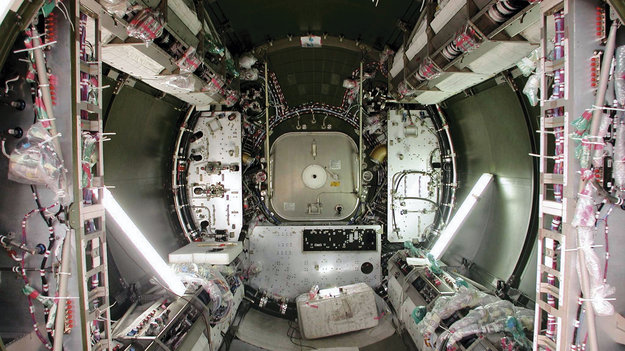
Columbus stripped

09-01-2018 04:30 PM CET


Human spaceflight and exploration image of the week: Europe's Columbus laboratory before installing the research facilities


Having trouble viewing this email? View it as a Web page.


This message has been sent by ESA Web Portal, ESRIN, 00044 Frascati (RM), Italy

NASA Digest, Vol 56, Issue 6


  January 08, 2018 
MEDIA ADVISORY M18-005
U.S. Cargo Spacecraft Set for Departure from International Space Station
The SpaceX Dragon cargo craft is pictured attached to the Harmony module after it arrived on Dec. 17. 2017.
The SpaceX Dragon cargo craft is pictured attached to the Harmony module of the International Space Station after it arrived on Dec. 17. 2017.
Credits: NASA

After delivering more than 4,800 pounds of science and supplies to the International Space Station, a SpaceX Dragon cargo spacecraft will depart the orbiting laboratory on Saturday, Jan. 13. NASA will provide live coverage of Dragon's departure beginning at 4:30 a.m. EST.

On Friday, Jan. 12, flight controllers will use the space station's Canadarm2 robotic arm to detach Dragon from the Earth-facing side of the station's Harmony module. After Dragon is maneuvered into place, a ground-controlled command will release the spacecraft as NASA's Expedition 54 Flight Engineers Joe Acaba and Scott Tingle monitor its departure at 5 a.m. Saturday.

Dragon's thrusters will fire to move the spacecraft a safe distance from the station before SpaceX flight controllers in Hawthorne, California, command its deorbit burn. The spacecraft will splash down about 10:36 a.m. in the Pacific Ocean, where recovery forces will retrieve Dragon and approximately 4,100 pounds of cargo, including science samples from human and animal research, biology and biotechnology studies, physical science investigations and education activities. NASA will not provide coverage of the deorbit burn and splashdown.

NASA and the Center for the Advancement of Science in Space (CASIS), the nonprofit organization that manages research aboard the U.S. national laboratory portion of the space station, will receive time-sensitive samples from experiments conducted aboard the station and begin working with researchers to process and distribute them within 48 hours of splashdown.

Dragon, the only space station resupply spacecraft capable of returning science and cargo to Earth, launched Dec. 15 on a SpaceX Falcon 9 rocket from Space Launch Complex 40 at Cape Canaveral Air Force Station in Florida and arrived at the station Dec. 17 for the company's 13th NASA-contracted commercial resupply mission to the station.

Get breaking news, images and features from the space station on social media at:

https://instagram.com/iss

and

https://www.twitter.com/Space_Station


Press Contacts

Cheryl Warner         
Headquarters, Washington
202-358-1100
cheryl.m.warner@nasa.gov

Gary Jordan
Johnson Space Center, Houston
281-483-5111
gary.j.jordan@nasa.gov


Tuesday, December 19, 2017

[JAXA:0544] Astronaut Kanai Starts the International Space Station (ISS) Expedition Mission

December 19, 2017 (JST)

Astronaut Kanai Starts the International Space Station (ISS) Expedition Mission

Astronaut Norishige Kanai, who arrived at the International Space Station (ISS) by the Soyuz spacecraft (53S/MS-07), has begun his long-duration stay as the 54th and 55th expedition crew member. He will stay onboard the ISS for about six months until returning to the ground on the Soyuz spacecraft (53S/MS-07) in June 3rd 2017.

Docking Date/Time:
at 5:39 p.m. on December 19 (Tue.), 2017 (Japan Standard Time)
at 11:39 a.m. on December 19 (Tue.), 2017 (Moscow Time)

Hatch Open Date/Time:
at 7:54 p.m. on December 19 (Tue.), 2017 (Japan Standard Time)
at 1:54 p.m. on December 19 (Tue.), 2017 (Moscow Time)

Comment by JAXA President
Astronaut Kanai Commences his Long-duration Stay on the ISS
http://global.jaxa.jp/press/2017/12/20171219_expedition.html#president


URL:
http://global.jaxa.jp/press/2017/12/20171219_expedition.html


National Research and Development Agency Japan Aerospace Exploration Agency (JAXA)
-=-=-=-=-=-=-=-=-=-=-=-=-=-=-=-=-=-=-=-=-=-=-=-=-=-=-=-=-=-=-=-=-=-=-=-=-=-=-=-=
Publisher :
 Public Affairs Department
 Japan Aerospace Exploration Agency (JAXA)
 Ochanomizu sola city,
 4-6 Kandasurugadai, Chiyoda-ku, Tokyo 101-8008 Japan
 TEL:+81-3-5289-3650

JAXA WEB SITE :
 http://global.jaxa.jp/

Smart phone-sized experiments on the ISS - German research on the International Space Station involving immune cells, neurons and cancer cells

DLR German Aerospace Center
- Web Portal News -


Smart phone-sized experiments on the ISS - German research on the International Space Station involving immune cells, neurons and cancer cells

On 15 December at 16:36 CET (10:36 local time), the US Dragon CRS 13 capsule was launched to the International Space Station (ISS) from Cape Canaveral (Florida) by a Falcon 9 rocket. On board were three cell-culture experiments by scientists at the Otto von Guericke University in Magdeburg and the University of Hohenheim, funded by the Space Administration of the German Aerospace Center (Deutsches Zentrum fuer Luft- und Raumfahrt; DLR). The biological samples will be installed in smart-phone-sized experiment containers in the STaARS 1 research facility in the Destiny module of the ISS. They will remain in microgravity for 30 days and return to Earth in the Dragon capsule in mid January 2018, when they will be examined in the laboratory.


Full article with images: http://www.dlr.de/dlr/en/desktopdefault.aspx/tabid-10081/151_read-25424/year-all/#/gallery/29402

DLR space research:
www.dlr.de/space

Stay up to date - Follow us on Twitter, Facebook and YouTube:

http://www.twitter.com/dlr_en
http://facebook.com/DLRen
http://youtube.com/dlrde

For updates in German:
http://www.twitter.com/dlr_de
http://facebook.com/DLRde

Tuesday, December 12, 2017

European Astro Pi Challenge – Mission Zero is ready for the ISS!

12-12-2017 05:28 PM CET


The ESA Astro Pi team are delighted to announce the launch of the final stage of Mission Zero, during which over 1700 school student teams from 22 ESA Member and Associate States will have their code run on the International Space Station (ISS). Participating teams will shortly be contacted to explain whether or not their code will run on the ISS.

Together with Mission Space Lab, teams from every ESA Member and Associate state are participating in the 2017-2018 European Astro Pi Challenge. Congratulations!


Having trouble viewing this email? View it as a Web page.


This message has been sent by ESA Web Portal, ESRIN, 00044 Frascati (RM), Italy

NASA Digest, Vol 55, Issue 9


  December 12, 2017 
MEDIA ADVISORY M17-149
Washington Students to Speak with NASA Astronaut on Space Station Today
Mark Vande Hei, Expedition 53 Flight Engineer
View of Mark Vande Hei, Expedition 53 Flight Engineer, inspecting the Extravehicular Mobility Unit (EMU) for upcoming Extravehicular Activity.
Credits: NASA

Students from nine school districts in Port Orchard, Washington, will speak with a NASA astronaut living, working and doing research aboard the International Space Station at 1:10 p.m. EST today. The 20-minute, Earth-to-space call will air live on NASA Television and the agency's website.

Students will travel to Gig Harbor, Washington, for the call to Expedition 54 astronaut Mark Vande Hei. They'll have the opportunity to ask questions about life aboard the space station, NASA's deep space exploration plans, and doing research in space.

Vande Hei arrived at the space station on Sept. 12 on his first space mission, and is scheduled to return to Earth in February 2018.

All nine school districts are in the West Sound STEM (Science, Technology, Engineering and Mathematics) Network, which was selected through a competitive process to host a downlink with the station. West Sound STEM Network is a dynamic collaboration of educators, business leaders and representative from local government and the military, working to introduce and link students, teachers, and the community to the vast array of STEM resources in their region.

Students across the participating districts prepared for the event by studying the space station, astronaut biographies, and the current research and activities being conducted aboard the space station. More than 1,200 attendees are expected to be on-site at Gig Harbor during the downlink.

Media interested in attending the event should contact Kareen Borders via email at borders@skschools.org or phone at 360-874-7059. Galaxy Theatres in Gig Harbor will host the event at 4649 Point Fosdick Drive NW.

Linking students directly to astronauts aboard the space station provides unique, authentic experiences designed to enhance student learning, performance and interest in STEM. This in-flight education downlink is an integral component of NASA's Year of Education on Station which provides extensive space station-related resources and opportunities to students and educators.

Follow the astronauts on social media:

https://www.twitter.com/NASA_astronauts/

See videos and lesson plans highlighting research on the International Space Station at:

 https://www.nasa.gov/stemonstation/


Press Contacts

Katherine Brown
Headquarters, Washington
202-358-1288
katherine.m.brown@nasa.gov

Nicole Cloutier-Lemasters
Johnson Space Center, Houston
281-483-5111
nicole.cloutier-1@nasa.gov


  December 12, 2017 
RELEASE 17-095
NASA Establishes Advisory Group for National Space Council
 

Members of the National Space Council are seen during the council's first meeting, Thursday, Oct. 5, 2017, at the Smithsonian National Air and Space Museum's Steven F. Udvar-Hazy Center in Chantilly, Va. The National Space Council, chaired by Vice President Mike Pence, heard testimony from representatives from civil space, commercial space, and national security space industry representatives.

Credits: NASA/Joel Kowsky

NASA has established a new advisory group on behalf of the National Space Council that will represent the expertise, interests and perspectives of non-federal aerospace organizations to the National Space Council.

The official charter for the Users' Advisory Group (UAG) was signed by acting NASA Administrator Robert Lightfoot on Dec. 6, and subsequently announced in the Federal Register. It explains, in detail, the role, responsibilities and operation of the advisory group. The UAG will advise and inform the National Space Council on a broad range of aerospace topics, including the impacts of U.S. and international laws and regulations, national security space priorities relating to the civil and commercial space sectors, scientific and human space exploration priorities, and ways to bolster support for U.S. space priorities and leadership in space.

The UAG will consist of between 15 and 30 members selected to serve in the capacity of either a representative or a special government employee (SGE). Representatives will come from non-federal aerospace organizations, such as private industry, and act as advocates for their sector. SGEs will be selected for their expertise in their particular aerospace field to provide objective advice. More information on the member nomination process will be made available later this month.

The charter will be available on NASA's website Wednesday, Dec. 13, at:

https://oiir.hq.nasa.gov/acmd.html


Press Contacts

Jen Rae Wang
Headquarters, Washington
202-358-1600
jenrae.wang@nasa.gov


Wednesday, December 6, 2017

[JAXA:0540] New Launch Date and Time of Soyuz Spacecraft with Astronaut Kanai aboard for ISS Expedition 54/55 Long Stay Mission

December 7, 2017 (JST)

New Launch Date and Time of Soyuz Spacecraft (53S/MS-07) with Astronaut Norishige Kanai aboard for ISS Expedition 54/55 Long Stay Mission

As a result of the Flight Readiness Review (FRR) held at Houston, U.S.A, on December 6, Japan Aerospace Exploration Agency (JAXA) and partner agencies of the International Space Station (ISS) project officially decided the launch date and time for the Soyuz spacecraft (53S/MS-07), which Astronaut Norishige Kanai will be onboard, as follows after confirming the safety and preparation status.
Astronaut Kanai will stay at the International Space Station for about four months as a crewmember of the Expedition 54/55, and will return to Earth in April on the Soyuz spacecraft (53S/MS-07).

Launch Date/Time:
At 16:21 on December 17 (Sun.), 2017 (Japan Standard Time)
At 13:21 on December 17 (Sun.), 2017 (Baikonur Time)
At 10:21 on December 17 (Sun.), 2017 (Moscow Time)

Launch Location:
Baikonur Cosmodrome (Republic of Kazakhstan)

Crewmembers:
Soyuz Commander Anton Shkaplerov (Roscosmos)
Flight Engineer Scott D. Tingle (NASA)
Flight Engineer Norishige Kanai (JAXA)

Reference links for further information:
http://iss.jaxa.jp/en/astro/biographies/kanai/index.html


URL:
http://global.jaxa.jp/press/2017/12/20171207_53s.html


National Research and Development Agency Japan Aerospace Exploration Agency (JAXA)
-=-=-=-=-=-=-=-=-=-=-=-=-=-=-=-=-=-=-=-=-=-=-=-=-=-=-=-=-=-=-=-=-=-=-=-=-=-=-=-=
Publisher :
 Public Affairs Department
 Japan Aerospace Exploration Agency (JAXA)
 Ochanomizu sola city,
 4-6 Kandasurugadai, Chiyoda-ku, Tokyo 101-8008 Japan
 TEL:+81-3-5289-3650

JAXA WEB SITE :
 http://global.jaxa.jp/