|

The Educational section of the Mantis Society. Live, Love, Learn
Subscribe To

 Posts
All Comments
Posts
All Comments
Tuesday, March 27, 2018
Breaking News | NASA delays JWST to 2020


 WASHINGTON — NASA announced March 27 that the launch of its next flagship astronomy spacecraft, the James Webb Space Telescope, will be delayed an additional year and that the mission is likely to overrun its $8 billion cost cap.

James Webb Space Telescope update: new launch window under review

The James Webb Space Telescope is undergoing final integration and testing that will require more time to ensure a successful mission. Following a new assessment of the remaining tasks on the highly complex space observatory, the launch window is now targeted for about May 2020.
Having trouble viewing this email? View it as a Web page.


| This message has been sent by ESA Web Portal, ESRIN, 00044 Frascati (RM), Italy |
NASA Digest, Vol 58, Issue 19
| March 27, 2018 RELEASE 18-019 NASA's Webb Observatory Requires More Time for Testing and Evaluation; New Launch Window Under Review
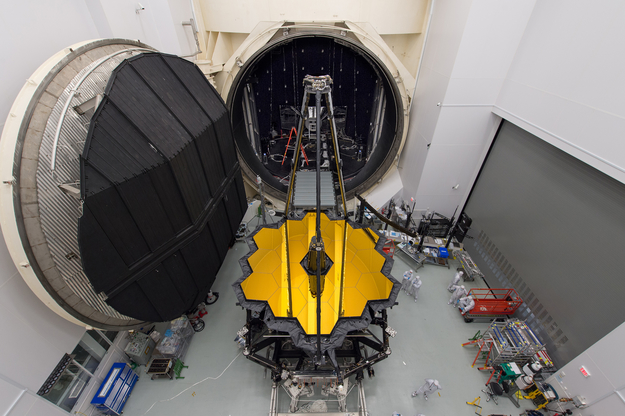
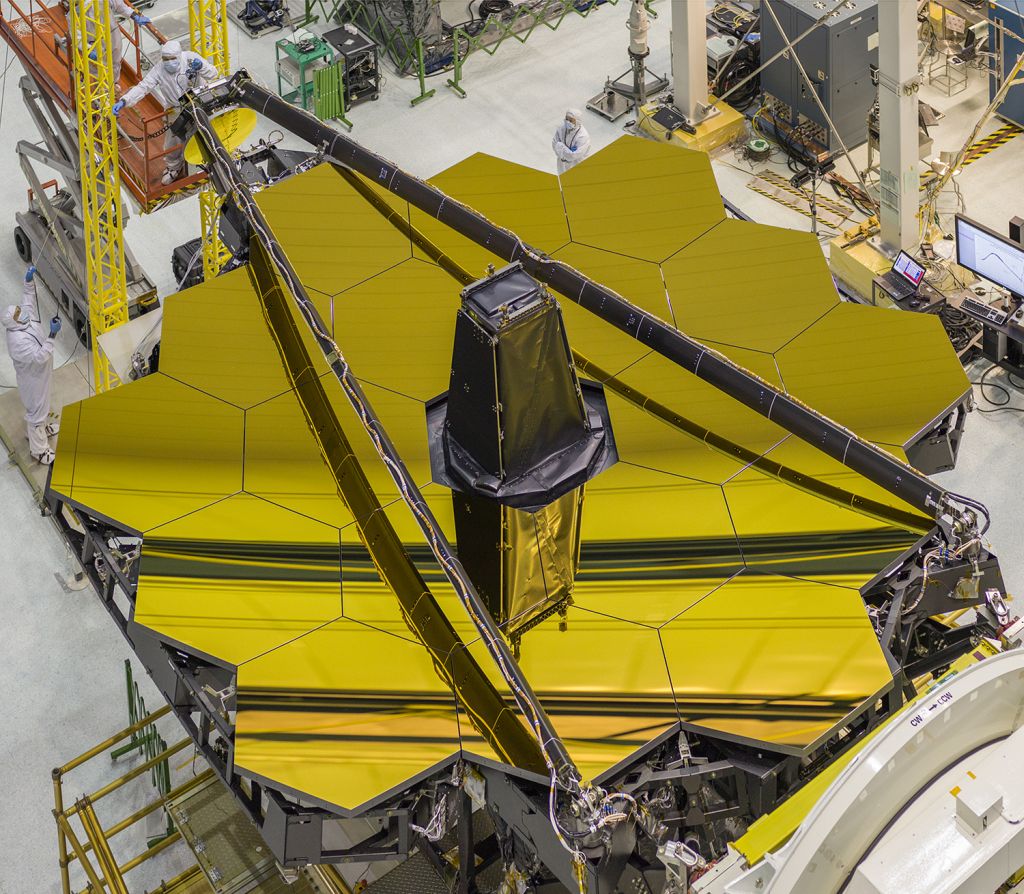
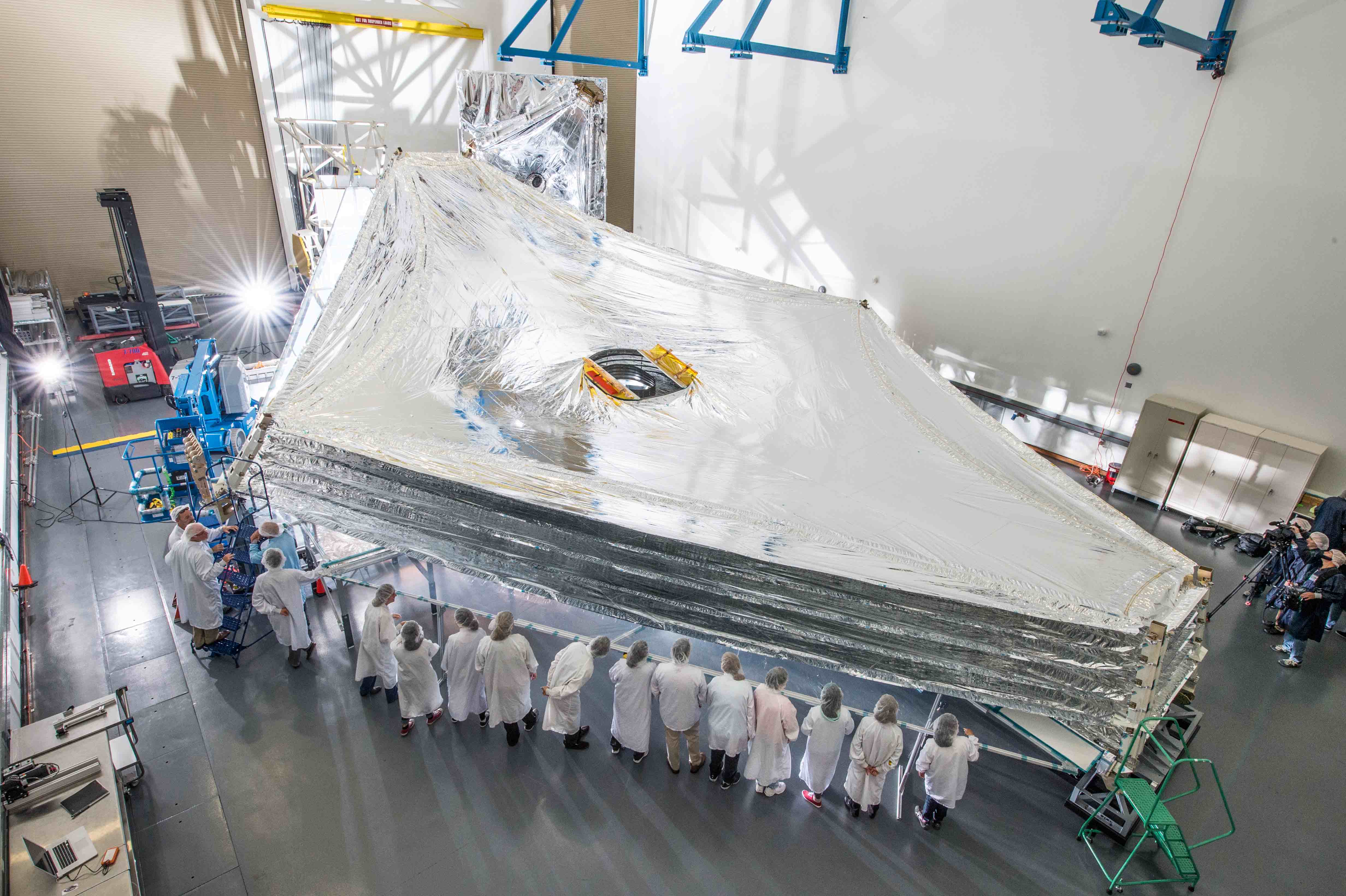
NASA's James Webb Space Telescope currently is undergoing final integration and test phases that will require more time to ensure a successful mission. After an independent assessment of remaining tasks for the highly complex space observatory, Webb's previously revised 2019 launch window now is targeted for approximately May 2020. "Webb is the highest priority project for the agency's Science Mission Directorate, and the largest international space science project in U.S. history. All the observatory's flight hardware is now complete, however, the issues brought to light with the spacecraft element are prompting us to take the necessary steps to refocus our efforts on the completion of this ambitious and complex observatory," said acting NASA Administrator Robert Lightfoot. Testing the hardware on the observatory's telescope element and spacecraft element demonstrate that these systems individually meet their requirements. However, recent findings from the project's Standing Review Board (SRB) indicate more time is needed to test and integrate these components together and then perform environmental testing at Northrop Grumman Aerospace Systems in Redondo Beach, California, the project's observatory contractor. NASA is establishing an external Independent Review Board (IRB), chaired by Thomas Young, a highly respected NASA and industry veteran who is often called on to chair advisory committees and analyze organizational and technical issues. The IRB findings, which will complement the SRB data, are expected to bolster confidence in NASA's approach to completing the final integration and test phase of the mission, the launch campaign, commissioning, as well as the entire deployment sequence. Both boards' findings and recommendations, as well as the project's input, will be considered by NASA as it defines a more specific launch time frame. NASA will then provide its assessment in a report to Congress this summer. NASA will work with its partner, ESA (European Space Agency), on a new launch readiness date for the Ariane 5 vehicle that will launch Webb into space. Once a new launch readiness date is determined, NASA will provide a cost estimate that may exceed the projected $8 billion development cost to complete the final phase of testing and prepare for launch. Additional steps to address project challenges include increasing NASA engineering oversight, personnel changes, and new management reporting structures. This is a pivotal year for Webb when the 6.5-meter telescope and science payload element will be joined with the spacecraft element to form the complete observatory. The spacecraft element consists of the tennis-court-sized sunshield, designed by Northrop Grumman, and the spacecraft bus, which houses the flight avionics, power system, and solar panels. Because of Webb's large size, engineers had to design components that fold origami-style into the Ariane 5 rocket's fairing configuration. Webb has already completed an extensive range of tests to ensure it will safely reach its orbit at nearly one million miles from Earth and perform its science mission. As with all NASA projects, rigorous testing takes time, increasing the likelihood of mission success. "Considering the investment NASA and our international partners have made, we want to proceed systematically through these last tests, with the additional time necessary, to be ready for a May 2020 launch," said Thomas Zurbuchen, associate administrator for NASA's Science Mission Directorate. After the successful test performance of Webb's telescope and science payload in 2017 at NASA's Johnson Space Flight Center in Houston, the telescope element was delivered to Northrop Grumman earlier this year. Both halves of the 13,500-pound observatory now are together in the same facility for the first time. The spacecraft element will next undergo environmental testing, subjecting it to the vibrational, acoustic and thermal environments it will experience during its launch and operations. These tests will take a few months to complete. Engineers then will integrate and test the fully assembled observatory and verify all components work together properly. Webb is an international project led by NASA with its partners, ESA and the Canadian Space Agency. ESA is providing the Ariane 5 as part of its scientific collaboration with NASA. The James Webb Space Telescope will be the world's premier infrared space observatory and the biggest astronomical space science telescope ever built, complementing the scientific discoveries of NASA's Hubble Space Telescope and other science missions. Webb will solve mysteries of our solar system, look beyond to distant worlds around other stars, and probe the mysterious structures and origins of our universe and our place in it. For more information about NASA's James Webb Space Telescope, visit: | ||
| Press Contacts Jen Rae Wang / Steve Cole | ||

NASA Digest, Vol 58, Issue 18
| March 26, 2018 MEDIA ADVISORY M18-054 NASA Hosts Media Teleconference on Status of James Webb Space Telescope
NASA will host a media teleconference at 11:30 a.m. EDT Tuesday, March 27, to provide an update on the agency's James Webb Space Telescope – what will be the world's premier infrared space observatory and the biggest astronomical science telescope ever built. Audio of the call will stream live on NASA's website. The briefing participants are:
To participate in the call, media must send their name, affiliation and phone number to Felicia Chou at felicia.chou@nasa.gov no later than 11 a.m. March 27. The most technically demanding and powerful space observatory ever developed, Webb will solve mysteries of our solar system, look beyond to distant worlds around other stars, and probe the mysterious structures and origins of our universe and our place in it. Webb will complement the scientific discoveries of NASA's Hubble Space Telescope and other science missions. Webb is an international project led by NASA with its partners, ESA (European Space Agency) and the Canadian Space Agency. For more information about NASA's Webb Telescope, visit: | ||
| Press Contacts Steve Cole / Natasha Pinol | ||
Tuesday, February 6, 2018


Wednesday, January 17, 2018


Friday, December 8, 2017
Byly vybrány první cíle pro Webbův kosmický teleskop

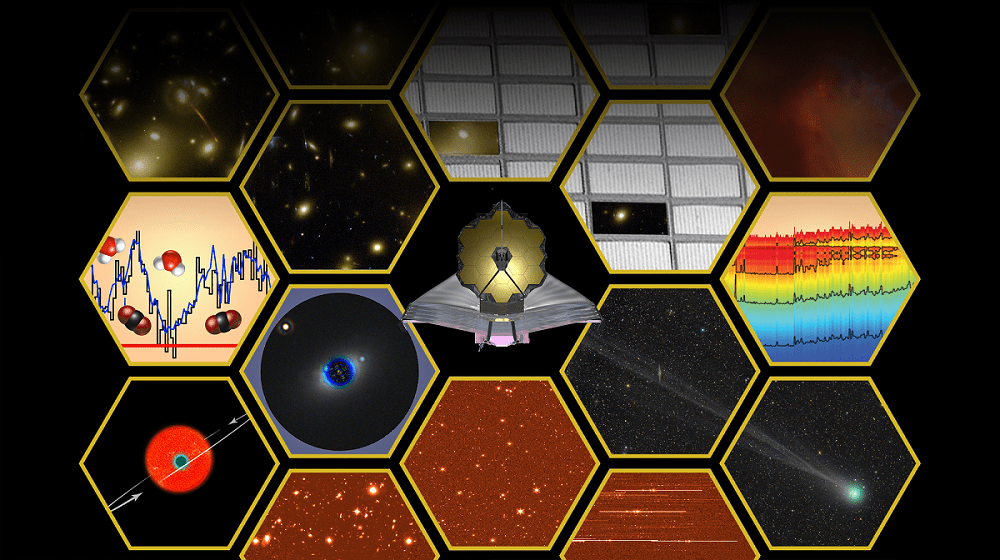
Plynový obr Jupiter, organické molekuly v mračnech formujících se hvězd a rodící se galaxie ve vzdáleném vesmíru jsou mezi prvními cíli, pro které budou k dispozici data z teleskopu JWST (James Webb Space Telescope). A to hned poté, co tato silná observatoř odstartuje v roce 2019 do vesmíru.
Having trouble viewing this email? View it as a Web page.
| This message has been sent by ESA Web Portal, ESRIN, 00044 Frascati (RM), Italy |